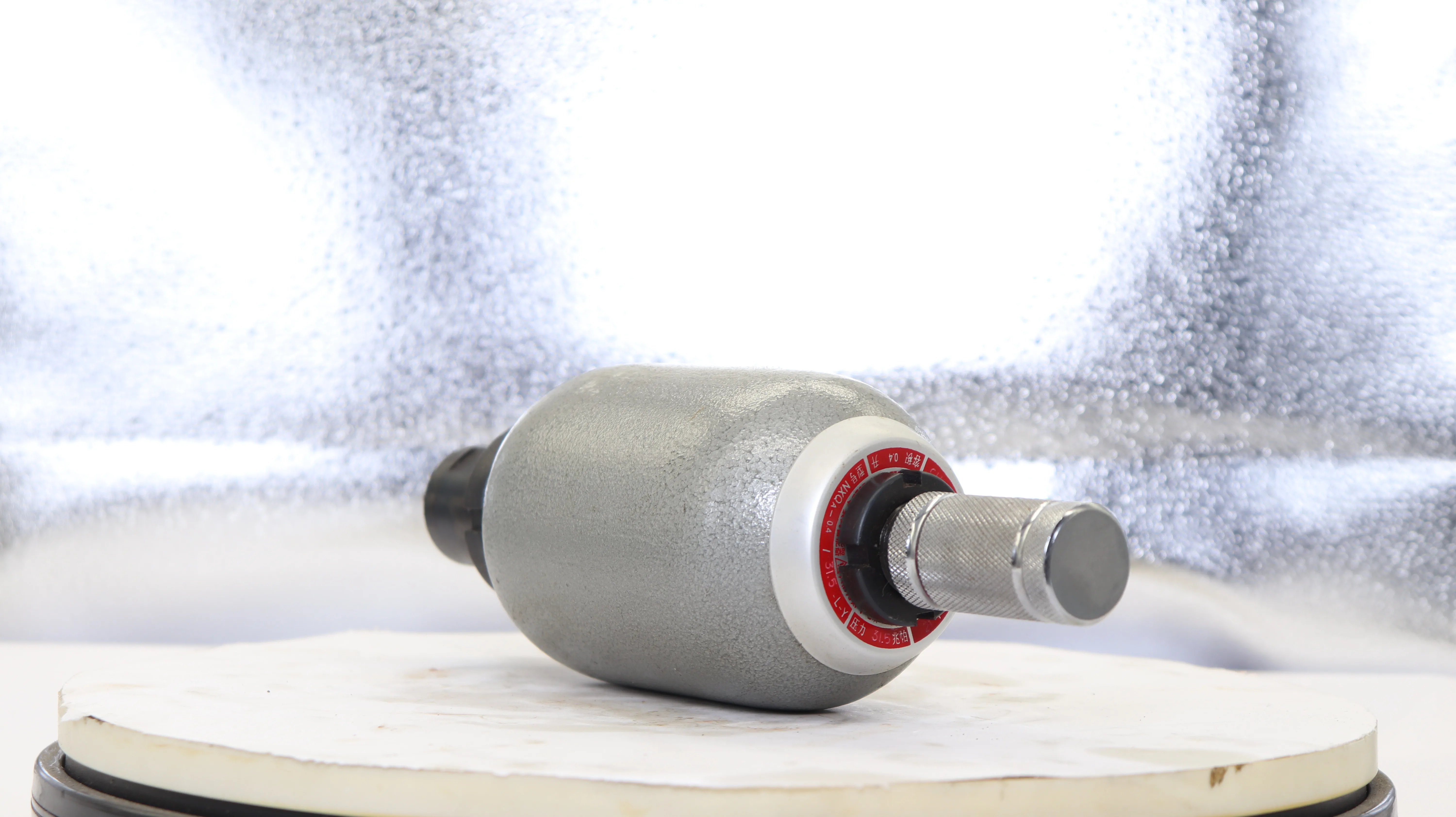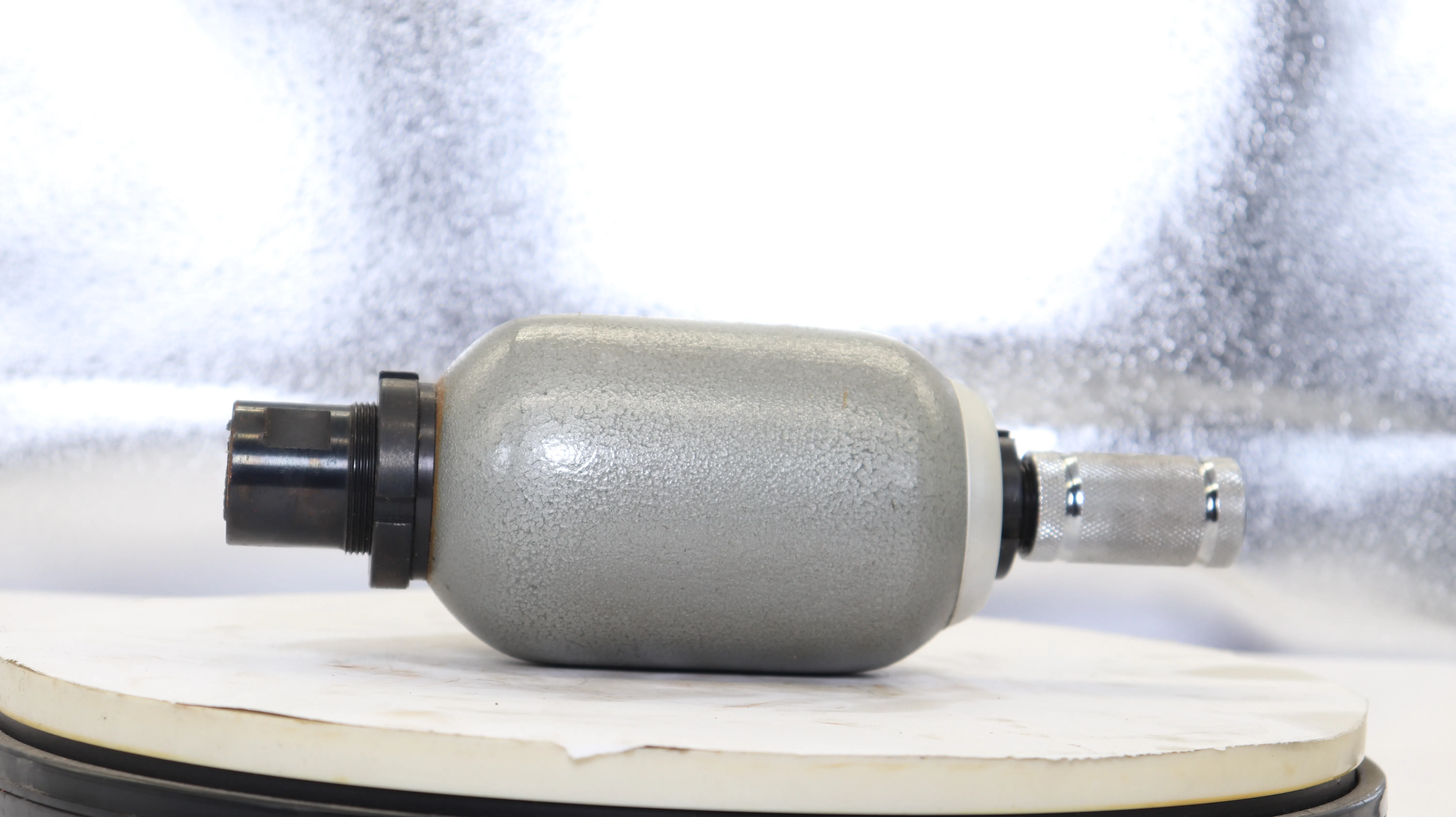
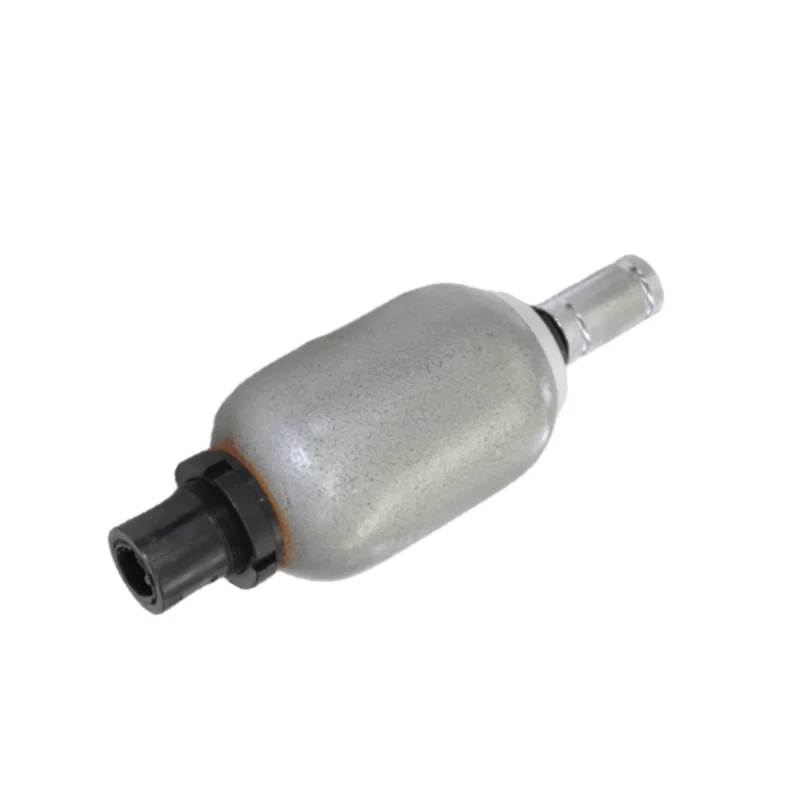
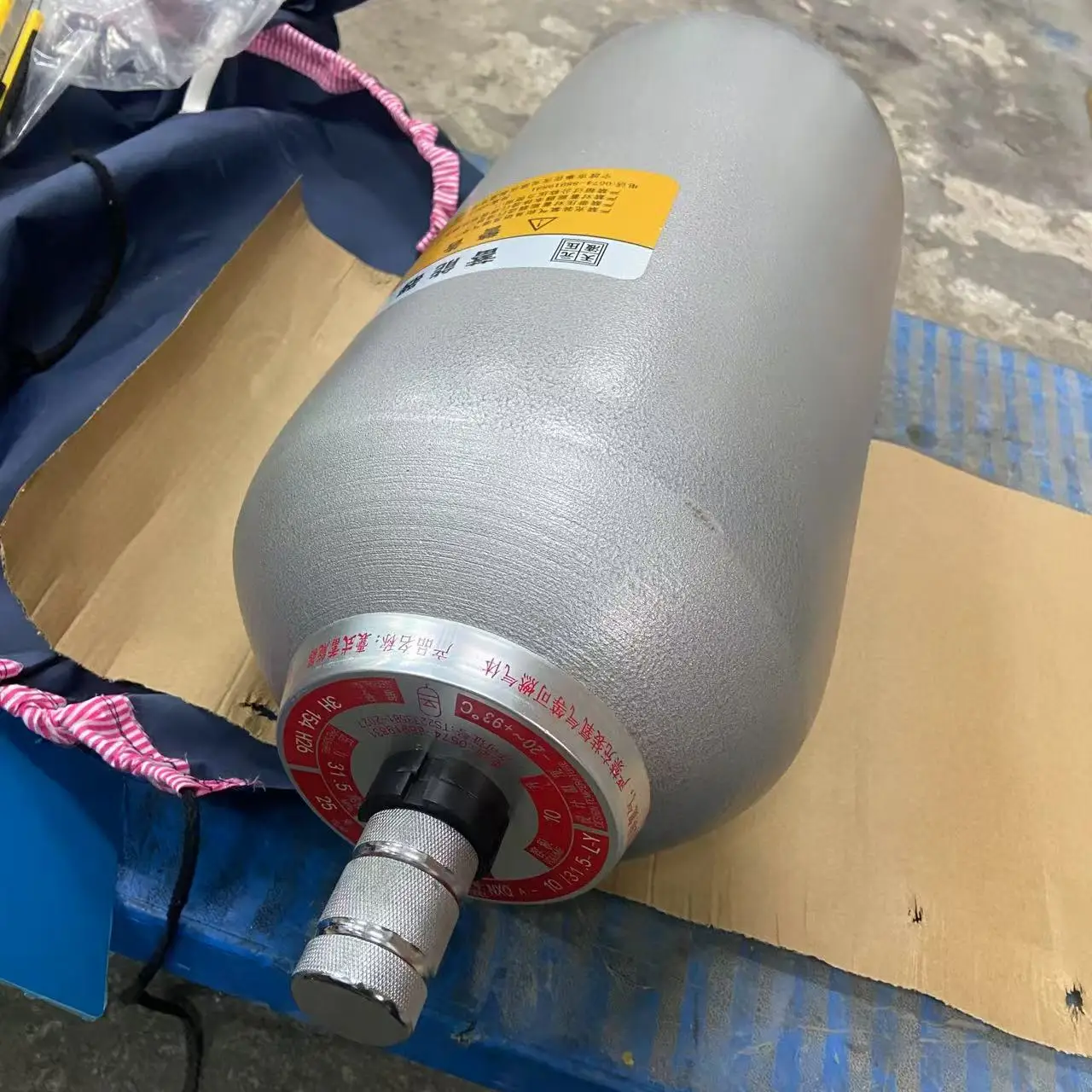
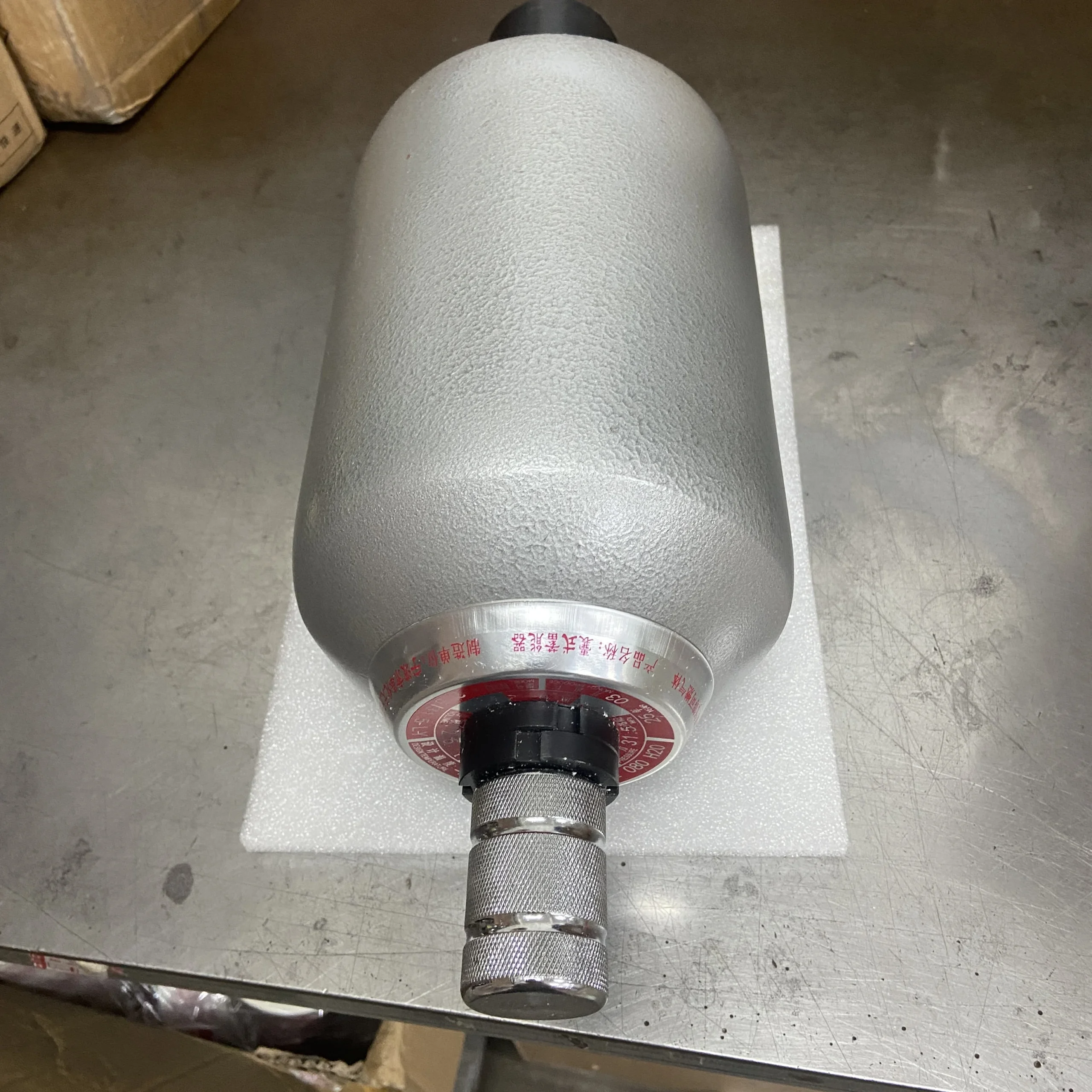

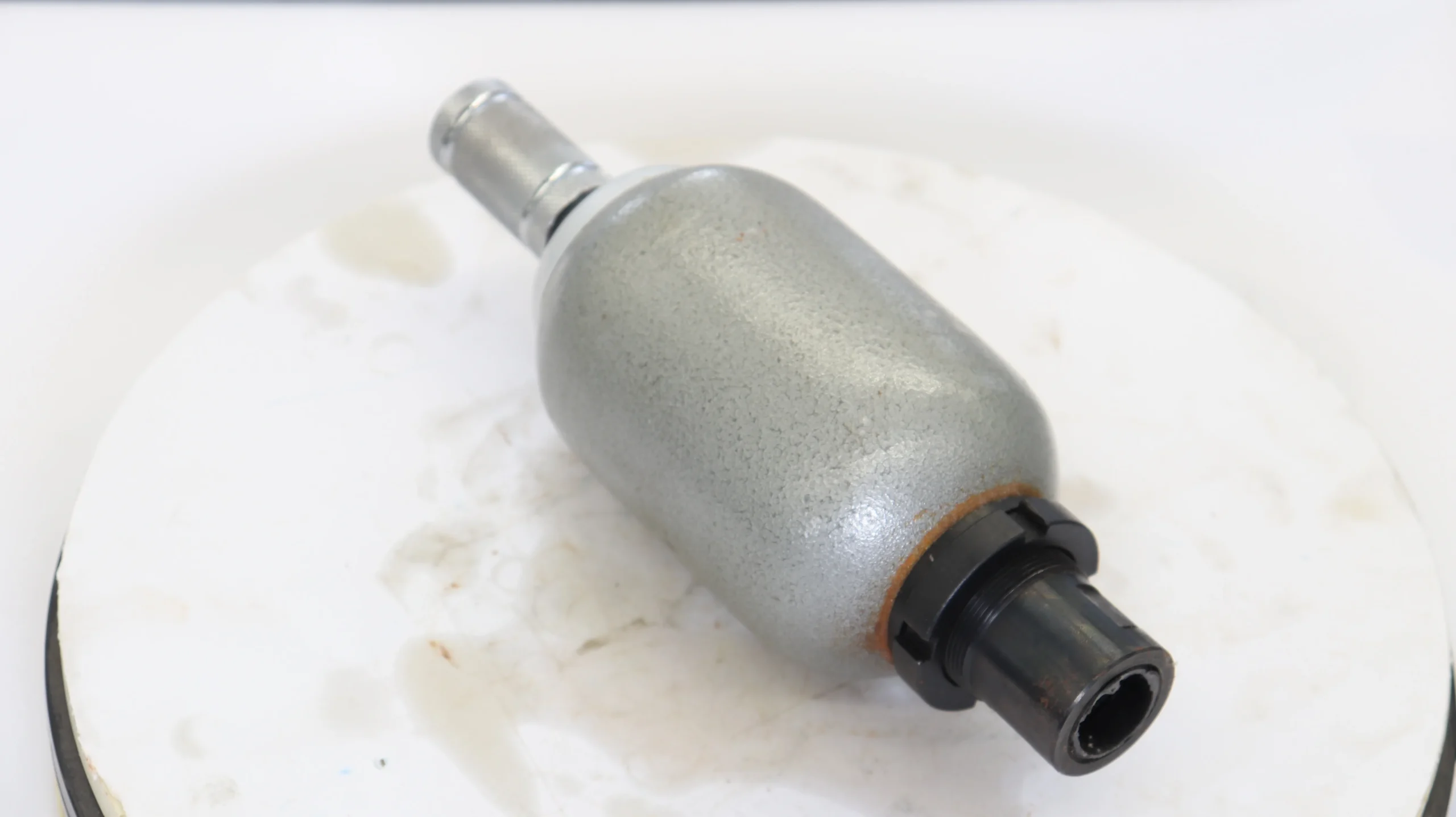
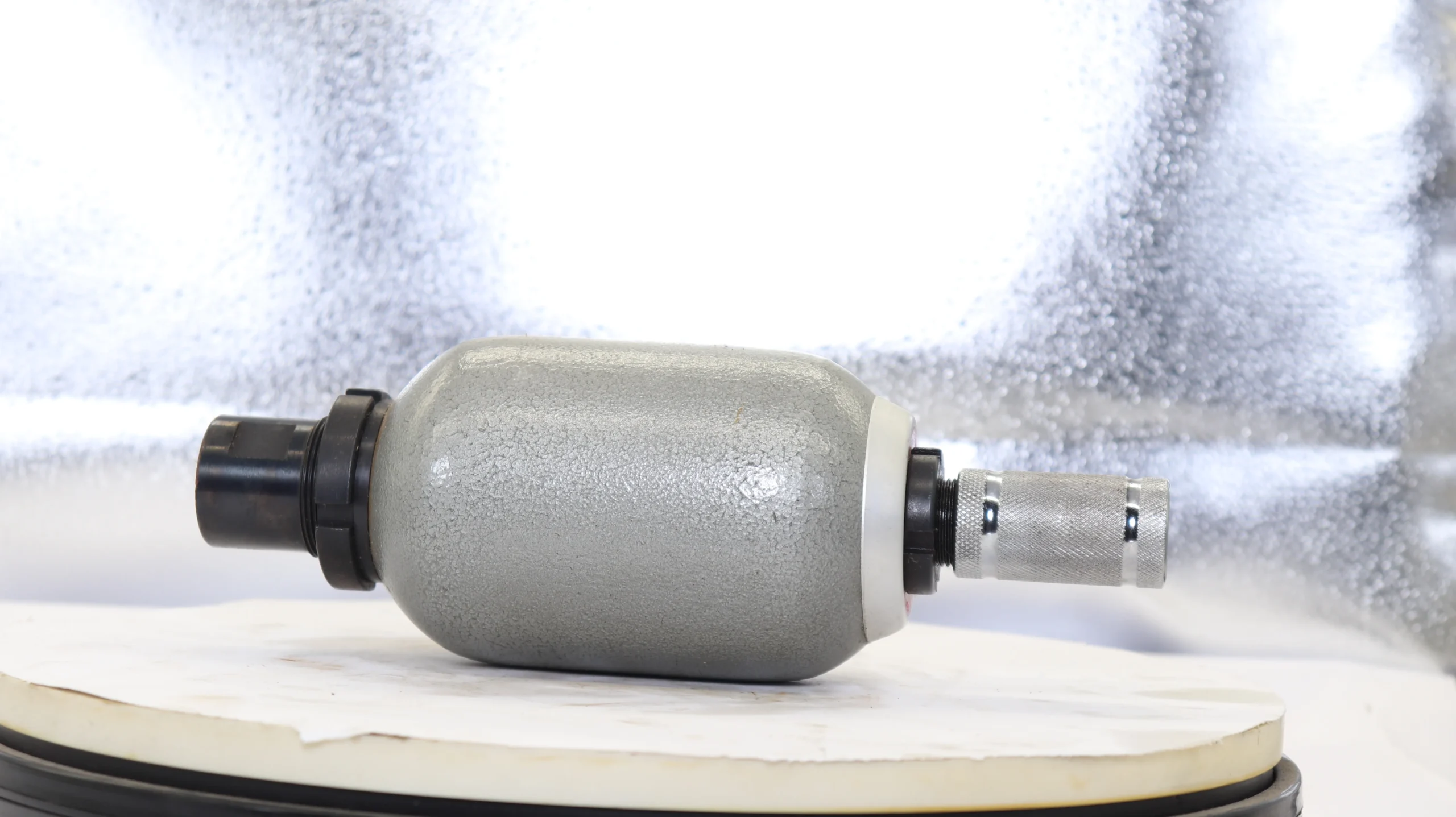

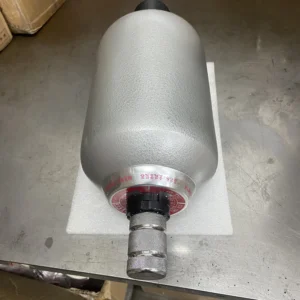


The severe-duty China National Standard NXQ & NXQA Series Bladder Hydraulic Accumulators (featuring primary market demanded profiles NXQ1.6L-Y-10MP, NXQ-2.5/31.5-L-Y, NXQ-10/31.5-L-Y, and heavy-volume selection NXQAB-80/10-L-Y), engineered and manufactured by Chengyuan Hydraulic, stand as premium fluid power pressure vessels offering 100% direct drop-in interchangeability within high-pressure forging machinery, metallurgical mills, automated CNC tooling stations, and large-scale power plant Hydraulic Power Units (HPUs). Adhering strictly to national pressure vessel manufacturing codes and fluid power technical parameters, this series specializes in energy storage, system pulsation dampening, emergency fluid reserve, and thermal expansion relief. With standardized fluid port thread dimensions (M-series, G-series, or standard flange profiles) and matching top gas valve configurations, these accumulators permit rapid on-site replacements with zero modifications to legacy framework installations.
Operating as highly pressurized energy storage cells under cyclical volumetric shifting, an accumulator’s structural fatigue life and bladder elastomer resilience dictate the baseline safety of adjacent hydraulic valves and pumps. At Chengyuan, build quality is backed by rigorous validation; 100% of our manufactured NXQ/NXQA accumulators pass 100% rigorous high-pressure gas/hydrostatic simulation test bench criteria. Tested within automated explosion-proof testing rooms, the seamless alloy steel shells undergo non-destructive hydrostatic testing up to 1.5 times the maximum design pressure (reaching up to 47.25 MPa for 31.5 MPa lines). Furthermore, assembled units undergo dynamic gas-tightness testing to eliminate any micro-porosity in the bladder, assuring absolute zero leakage under high-frequency operational duty cycles.
Technical Specifications
Product Series Classification: Chinese Standard NXQ / NXQA / NXQAB Series Bladder Type Hydraulic Accumulators
Compatible System Fluids: Petroleum-based mineral hydraulic oils, water-glycols, and low-flammability emulsions (determined by bladder elastomer compounds).
Gas Pre-Charge Media Requirement: Must be pre-charged strictly with high-purity Nitrogen gas ($\ge 99.5\%$); never fill with oxygen, compressed air, or flammable gases.
System Operating Temperature Range: Standard structural envelope from $-10^{\circ}\text{C}$ to $+70^{\circ}\text{C}$ continuous.
Model Nomenclature Breakdown & Technical Parameters:
Part Specification: NXQ1.6L-Y-10MP
Nominal Gas Capacity: 1.6 Liters (1.6L).
Fluid Connection Style Y: Standard pressure-gauge interface or specific industrial port configurations.
Nominal Operational Pressure: 10 MPa (100 bar) medium-high pressure rating.
Part Specification: NXQ-2.5/31.5-L-Y
Nominal Gas Capacity: 2.5 Liters.
Nominal Operational Pressure: 31.5 MPa (315 bar) heavy-duty ultra-high pressure rating.
Fluid Connection Style L: Threaded fluid port inlet (typically M33x2 or matching standard G-threads).
Fluid Medium Code Y: Standard petroleum-based mineral hydraulic fluids.
Part Specification: NXQ-10/31.5-L-Y
Nominal Gas Capacity: 10 Liters.
Nominal Operational Pressure: 31.5 MPa (315 bar).
Fluid Port & Construction: Threaded fluid port matching built-in mechanical poppet valve assemblies, built for mineral oil hydraulic systems.
Part Specification: NXQAB-80/10-L-Y
Structural Revision Code NXQAB: Modified down-loading/narrow-neck design optimized for streamlined bladder replacement in restricted vertical spaces.
Nominal Gas Capacity: 80 Liters (Ultra-high capacity accumulator for high-flow emergency backup circuits).
Nominal Operational Pressure: 10 MPa (100 bar).
Port and Fluid Adaptability: L-type threaded fluid boundary, Y-type petroleum hydraulic oil.
Key Technical Advantages
Seamless Monoblock Forged High-Tensile Steel Shell: Accumulator cylindrical vessels are processed from premium seamless 35CrMo or 45# alloy steel tubes via high-heat spinning closing methods. Shot-blasted internally and externally for complete rust inhibition, this weld-free architecture eliminates stress-concentration zones, yielding a proven fatigue life of over 200,000 pressure cycles.
Molded High-Elasticity Low-Permeability Rubber Bladders: The internal nitrogen bladder is formed from premium synthetic NBR (Nitrile Butadiene Rubber) vulcanized under high clamping pressures. The tight elastomer molecular matrix exhibits a gas permeability rate well below competitive standards, ensuring excellent low-temperature elasticity and preventing long-term nitrogen migration.
Aero-Hydrodynamically Optimized Non-Extrusion Poppet Valve: The bottom fluid discharge assembly integrates a precision spring-loaded poppet valve. When fluid is rapidly evacuated and the expanding bladder pushes downward, the valve closes swiftly to block bladder extrusion, eliminating the risk of bladder tearing at the oil port.
Multi-Stage High-Pressure Gas Valve Core Assembly: Located at the top of the accumulator shell, the charging gas valve features a multi-layered soft-to-hard sealing assembly. Fitted with a stainless steel core and high-hardness FKM face-seals, it maintains zero leakage under sustained 31.5 MPa static pressures, ensuring a highly reliable, low-maintenance field asset.
Application Areas
Thanks to their versatile pressure ratings, massive instantaneous volume delivery, and reliable sealing, NXQ/NXQA accumulators serve as primary fluid power reservoirs in demanding systems:
Heavy Forging & Stamping Infrastructure: Emergency backup and high-speed oil delivery loops for heavy hydraulic presses, die-casting machinery, and automated industrial scrap shear lines.
Metallurgical Steel Processing & Coking Plants: Roll-gap automatic gauge control (AGC) circuits, high-pressure pulverizing roll mills, and heavy hydraulic pushing gear.
CNC Machine Tools & Oilfield Automation: Fast-acting tool turret clamping blocks, steam control valves for power plant EH systems, and high-pressure emergency backup blocks for blowout preventers (BOP).
Expert Maintenance Tips
Pre-Charge Exclusively with Nitrogen and Calibrate Pressures to Design Limits: Bladder pre-charge pressure $p_0$ must be tightly configured between 0.25 and 0.9 times the maximum hydraulic system pressure (typically $p_0 \approx 0.9 \times p_{min}$ where $p_{min}$ is the minimum active operational pressure). Excessively high gas pressure causes the bladder to impact the bottom poppet valve excessively, leading to mechanical tearing. Conversely, insufficient gas pressure leads to over-folding and premature bladder fatigue failure.
Retain Fluid Lubrication Within the Oil Chamber Prior to Gas Pre-Charging: Before pumping high-pressure nitrogen gas into the bladder, ensure a small volume of clean hydraulic oil remains in the fluid chamber to lubricate the poppet valve and the lower bladder surfaces. Open the nitrogen source valve slowly to allow gradual, uniform bladder expansion, preventing tears that can occur when inflated rapidly when dry.
Perform Pressure Calibration and Gas Leak Inspections Every 3 to 6 Months: Because ambient temperature shifts alter internal gas density (a $10^{\circ}\text{C}$ rise increases pressure by roughly 3.4%), always measure the true gas pre-charge using a proper testing unit (such as the FPU kit) while the hydraulic line is fully depressurized to 0 bar. Re-charge the bladder if the nitrogen pressure drops by more than 10% of the target design specification.