
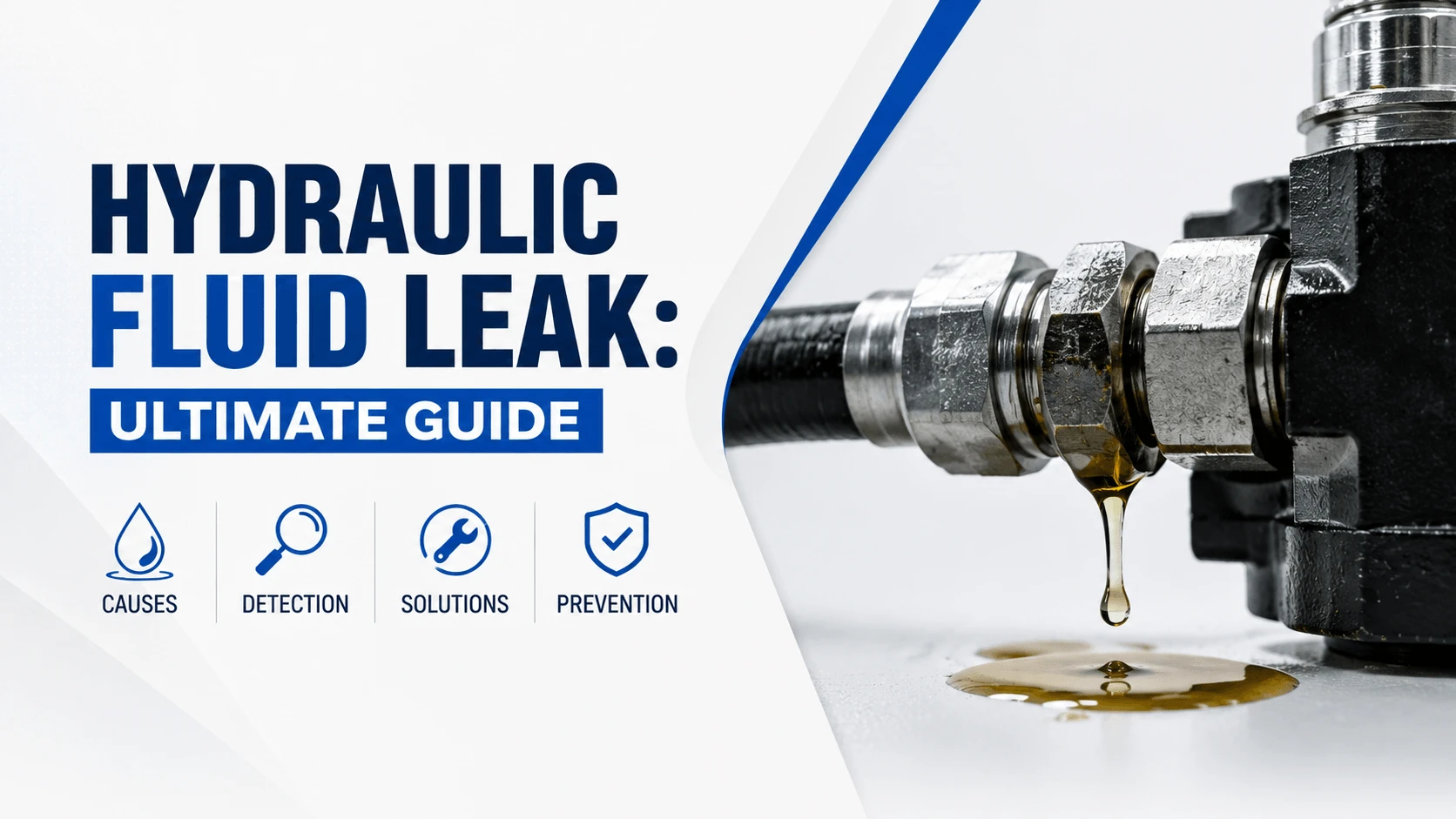
What is a Hydraulic Fluid Leak?
| Leak Type | Description | Common Result |
|---|---|---|
External leak |
Oil escapes outside the system |
Visible oil, pressure loss, safety hazard |
Internal leak |
Oil bypasses inside a component |
Weak actuator movement, heat, efficiency loss |
Why Hydraulic Fluid Leaks Are Dangerous
A hydraulic oil leak can cause:
- Loss of system pressure
- Slow or unstable actuator movement
- Pump cavitation from low oil level
- Fire risk near hot surfaces
- Slip hazards around equipment
- Environmental contamination
- High-pressure fluid injection injury
Never use your hand to search for a leak. Safety agencies warn that high-pressure hydraulic fluid can penetrate the skin and may require emergency surgery. Use lockout procedures, depressurize the system, and inspect with safe methods, such as cardboard or wood only after following site safety rules.
Common Causes of Hydraulic Fluid Leaks
| Cause | Typical Sign | Corrective Action |
|---|---|---|
Hose abrasion |
Wet hose cover, exposed reinforcement |
Replace hose, add clamps or abrasion sleeve |
Loose or damaged fitting |
Oil around coupling |
Inspect threads, seat, torque, and seal |
Failed O-ring or seal |
Leak at port or flange |
Replace with compatible seal material |
Cylinder rod seal wear |
Oil on rod or gland |
Inspect rod scoring and replace seal kit |
Excess pressure |
Repeated hose or seal failure |
Check relief valve and pressure spikes |
Contaminated oil |
Seal scoring, valve wear |
Filter, flush, and control contamination |
Wrong hose routing |
Kinks, twist, rubbing |
Re-route with proper bend radius |
Heat degradation |
Hardened seals, dark oil |
Check cooler, viscosity, and duty cycle |
How to Find a Hydraulic Leak Safely
- Shut down the machine when possible.
- Relieve stored hydraulic pressure.
- Use lockout/tagout procedures.
- Clean the suspected area.
- Inspect hoses, fittings, seals, and ports.
- Use cardboard or a leak-detection method, not your hand.
- Confirm whether the leak is external or internal.
- Replace damaged parts instead of overtightening fittings.
A common mistake is tightening a leaking fitting without identifying the sealing style. JIC, BSPP, ORFS, NPT, SAE flange, and metric fittings seal differently. Overtightening can crack fittings, distort seats, damage O-rings, or make the leak worse.
Troubleshooting by Component
Hydraulic hose leak:
Look for abrasion, cracked cover, exposed wire, oil weeping near the crimp, or pinhole spray. Replace the hose assembly if reinforcement is damaged.
Hydraulic fitting leak:
Check whether the fitting seals on threads, an O-ring, a cone seat, or a flat face. Replace damaged seals and inspect mating surfaces.
Hydraulic cylinder leak:
Oil around the rod usually points to rod seal wear, rod scoring, contamination, or side loading. Replacing only the seal may not solve the problem if the rod is damaged.
Hydraulic pump leak:
Oil near the shaft may indicate shaft seal failure, case pressure issues, misalignment, or worn bearings. Repeated shaft seal failure often means the root cause is not the seal itself.
Hydraulic valve leak:
External leakage may come from port seals or body plugs. Internal leakage can cause drifting cylinders, weak holding force, or heat buildup.
Can You Keep Running a Machine With a Hydraulic Leak?
In most industrial settings, continuing to run equipment with a hydraulic fluid leak is poor practice. A minor leak can quickly become a hose burst, pressure failure, contamination issue, or safety incident.
Stop operation immediately if there is:
- High-pressure spray
- Sudden pressure loss
- Oil near hot surfaces
- Cylinder drift under load
- A damaged hose cover
- Oil reaching drains, soil, or water
- Any suspected injection injury
Maintenance Tips to Prevent Hydraulic Fluid Leaks
- Keep hoses away from sharp edges and moving parts.
- Use clamps and guards to prevent abrasion.
- Maintain correct bend radius.
- Replace aged or cracked hose assemblies.
- Use the right seal material for the fluid and temperature.
- Control contamination with proper filtration.
- Keep hydraulic oil at the correct level and viscosity.
- Check pressure settings and relief valves.
- Inspect fittings after vibration-heavy operation.
- Document recurring leaks by component and location.
FAQ
Authority Sources
- HSE: High-pressure fluid injection hazards
- OSHA hydraulic fluid injection accident report
- EPA oil spill reporting guidance
- ISO 4413 hydraulic fluid power safety requirements overview
- ATSDR hydraulic fluids toxicological profile