
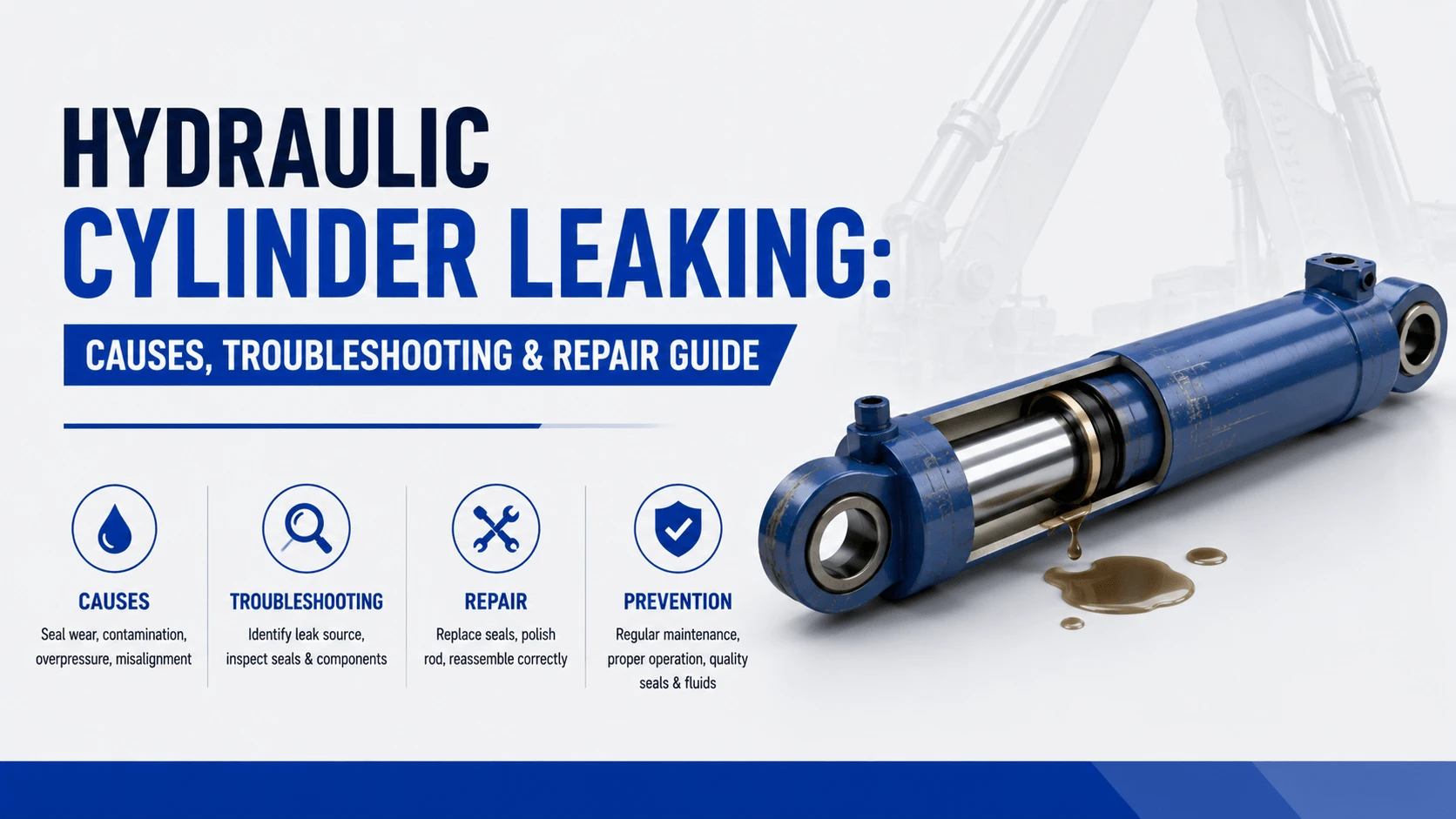
Hydraulic Cylinder Leaking: Causes, Troubleshooting & Repair Guide

Hydraulic Cylinder Leaking- Causes, Troubleshooting & Repair Guide (1)

Table of Contents

A hydraulic cylinder leaking is not just a housekeeping issue. In many machines, leakage means reduced lifting force, unstable movement, contamination risk, higher oil consumption, and possible safety hazards. If the leak is ignored, a low-cost seal problem can turn into rod damage, barrel scoring, pump overload, or unplanned downtime.
 
In most cases, hydraulic cylinder leakage comes from worn seals, damaged rods, contaminated oil, misalignment, excessive pressure, or poor surface finish. The right repair depends on where the oil is leaking and whether the leakage is external or internal.

What Does a Leaking Hydraulic Cylinder Mean?

A leaking hydraulic cylinder means hydraulic oil is escaping past a sealing surface. This can happen outside the cylinder, such as oil leaking around the rod or gland, or inside the cylinder, where oil bypasses the piston seal from one chamber to another.
 
External leakage is usually visible. Internal leakage is more difficult to identify because the oil stays inside the cylinder, but the actuator may drift, lose force, or fail to hold load.

External vs Internal Hydraulic Cylinder Leakage

Leak Type Typical Symptom Common Cause
External rod leak
Oil on exposed rod or gland area
Worn rod seal, scratched rod, damaged wiper
External port leak
Oil around fittings or ports
Loose fitting, damaged O-ring, cracked port
Cap or gland leak
Oil around end cap
Failed static seal or poor assembly
Internal leak
Cylinder drifts or loses force
Worn piston seal, scored barrel, damaged piston
A cylinder can also have both types at the same time, especially in older equipment working in dirty or high-load conditions.

Common Places Where Hydraulic Cylinders Leak

The most common leak point is the rod seal area. When the rod extends and retracts, it carries a thin oil film. The rod seal controls this film, while the wiper seal keeps dirt and moisture out. If either seal fails, leakage usually appears around the rod gland.

Other leak points include:

  • Port fittings and adapter seals
  • Welded joints or cracked tubes
  • End caps and gland threads
  • Cushion adjustment screws
  • Piston seals inside the barrel

For mobile equipment, rod damage is especially common because exposed cylinder rods operate around mud, dust, stones, impact, and weather.

Main Causes of Hydraulic Cylinder Leakage
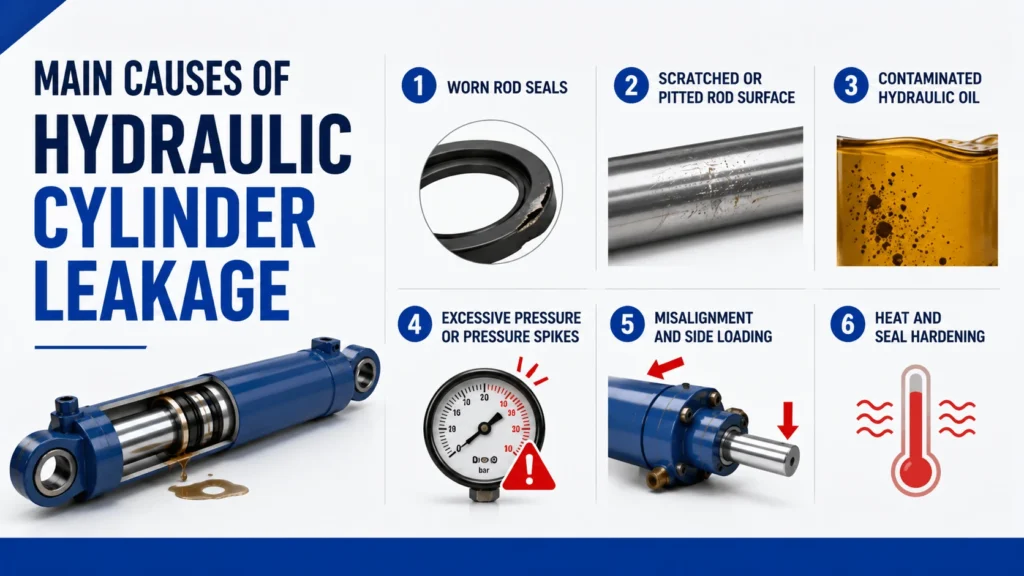
Main Causes of Hydraulic Cylinder Leakage 1. Worn Rod Seals 2. Scratched or Pitted Rod Surface 3. Contaminated Hydraulic Oil 4. Excessive Pressure or Pressure Spikes 5. Misalignment and Side Loading 6. Heat and Seal Hardening

1. Worn Rod Seals

Rod seals wear over time due to friction, pressure cycling, heat, and contamination. Once the sealing lip hardens, cuts, or loses elasticity, oil begins to pass along the rod surface.

2. Scratched or Pitted Rod Surface

A new seal will not last if the chrome rod is scratched, pitted, bent, or corroded. Rod surface damage acts like a cutting tool against the seal lip. In practical repair work, replacing seals without inspecting the rod is one of the most common reasons for repeated leakage.

3. Contaminated Hydraulic Oil

Dirt, metal particles, water, and degraded oil can damage seals and cylinder surfaces. Contamination also accelerates wear in pumps, valves, and other hydraulic components, so a leaking cylinder may be a symptom of a wider system problem.

4. Excessive Pressure or Pressure Spikes

Hydraulic cylinders are often used at around 1,500 to 3,000 psi in mobile machinery, with some industrial systems operating higher depending on design. Pressure spikes can extrude seals, damage backup rings, or overload the gland area.

5. Misalignment and Side Loading

Hydraulic cylinders are designed to push and pull along their axis. Side loading from poor mounting geometry, worn pins, bent structures, or uneven loads can force the rod against the bearing and seal. This causes uneven wear and premature leakage.

6. Heat and Seal Hardening

High oil temperature reduces seal life. Excessive heat can harden nitrile seals, reduce lubrication film strength, and increase leakage. If multiple cylinders are leaking on the same machine, check oil temperature and system cooling before replacing seals.

Hydraulic Cylinder Leaking Troubleshooting Guide

Symptom Likely Cause Recommended Check
Oil leaking from rod end
Rod seal failure
Inspect seal, rod finish, wiper, bearing
Cylinder drifts under load
Internal piston seal leakage
Perform pressure isolation or drift test
New seal leaks quickly
Rod damage or misalignment
Check rod straightness and side load
Oil around port
Fitting or O-ring issue
Inspect torque, thread type, seal condition
Foamy oil and weak movement
Air ingress or low oil level
Check reservoir, suction line, return flow
Repeated seal extrusion
Pressure spike or wrong seal material
Check relief valve, pressure peaks, seal spec

How to Fix a Leaking Hydraulic Cylinder
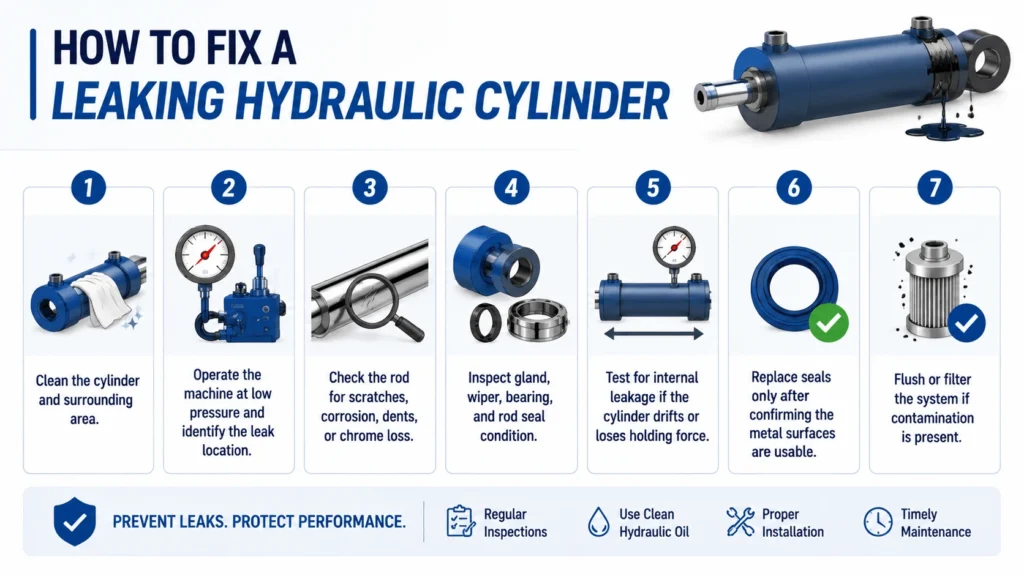
How to Fix a Leaking Hydraulic Cylinder 1.Clean the cylinder and surrounding area. 2.Operate the machine at low pressure and identify the leak location. 3.Check the rod for scratches, corrosion, dents, or chrome loss. 4.Inspect gland, wiper, bearing, and rod seal condition. 5.Test for internal leakage if the cylinder drifts or loses holding force. 6.Replace seals only after confirming the metal surfaces are usable. 7.Flush or filter the system if contamination is present.

The repair process should start with diagnosis, not immediate seal replacement.

  1. Clean the cylinder and the surrounding area.
  2. Operate the machine at low pressure and identify the leak location.
  3. Check the rod for scratches, corrosion, dents, or chrome loss.
  4. Inspect the gland, wiper, bearing, and rod seal condition.
  5. Test for internal leakage if the cylinder drifts or loses holding force.
  6. Replace seals only after confirming the metal surfaces are usable.
  7. Flush or filter the system if contamination is present.

For a simple rod seal leak with a clean rod and no bore damage, a seal kit may solve the problem. If the rod is scored or bent, the repair may require rechroming, rod replacement, or complete cylinder replacement.

When Should You Replace the Cylinder Instead of Repairing It?

Repair is usually worthwhile when the cylinder body, rod, and mounting points are still in good condition. Replacement may be better when repair cost approaches the price of a new unit or when downtime is more expensive than the component itself.

Consider replacement if:

  • The rod is deeply scored, bent, or heavily corroded
  • The barrel is scored or out of round
  • Welds or ports are cracked
  • The cylinder has repeated seal failures
  • The machine requires a fast turnaround
  • OEM dimensions or mounting interfaces are critical

Maintenance Tips to Prevent Hydraulic Cylinder Leakage

  • Keep hydraulic oil clean and use proper filtration.
  • Replace damaged wipers before dirt reaches the rod seal.
  • Protect exposed rods during storage.
  • Avoid pressure settings above the cylinder rating.
  • Inspect pins, bushings, and mounts for side loading.
  • Monitor oil temperature during continuous operation.
  • Use the correct seal material for oil type, temperature, and pressure.

A leaking hydraulic cylinder should be treated as both a component issue and a system condition. If the root cause is contamination, overheating, or misalignment, replacing seals alone will not provide a durable repair.

FAQs

Why is my hydraulic cylinder leaking from the rod?
A hydraulic cylinder usually leaks from the rod because the rod seal is worn, cut, hardened, or damaged. Rod scratches, corrosion, contamination, and side loading can also cause oil to pass the seal.
 
Can you use a hydraulic cylinder if it is leaking?
A minor leak may allow short-term operation, but it is not recommended for critical lifting, holding, or safety-related applications. Leakage can reduce force, cause drift, contaminate work areas, and create safety risks.
 
What causes internal leakage in a hydraulic cylinder?
Internal leakage is usually caused by worn piston seals, scored barrel surfaces, damaged piston wear rings, or excessive clearance. The common symptom is cylinder drift or loss of holding force.
 
Is it enough to replace the seal kit?
Only if the rod, barrel, gland, and bearing surfaces are in good condition. If the rod is scratched or the cylinder is misaligned, a new seal kit may fail quickly.
 
How do I know if my hydraulic cylinder needs repair or replacement?
Repair is suitable when the main metal components are reusable. Replacement is often better when the rod is bent, the barrel is scored, welds are cracked, or repeated leakage has already occurred.

Authority Sources

Need help identifying the correct replacement cylinder, seal kit, or repair option? Send your cylinder bore, rod diameter, stroke, mounting type, working pressure, and photos of the leak area to our engineering team for review.

 

Related Articles

Scroll to Top
Shoot Us An Email

Professional Manufacturer