
Introduction
What a Hydraulic Motor Factory Produces
Types of Hydraulic Motors You Can Source
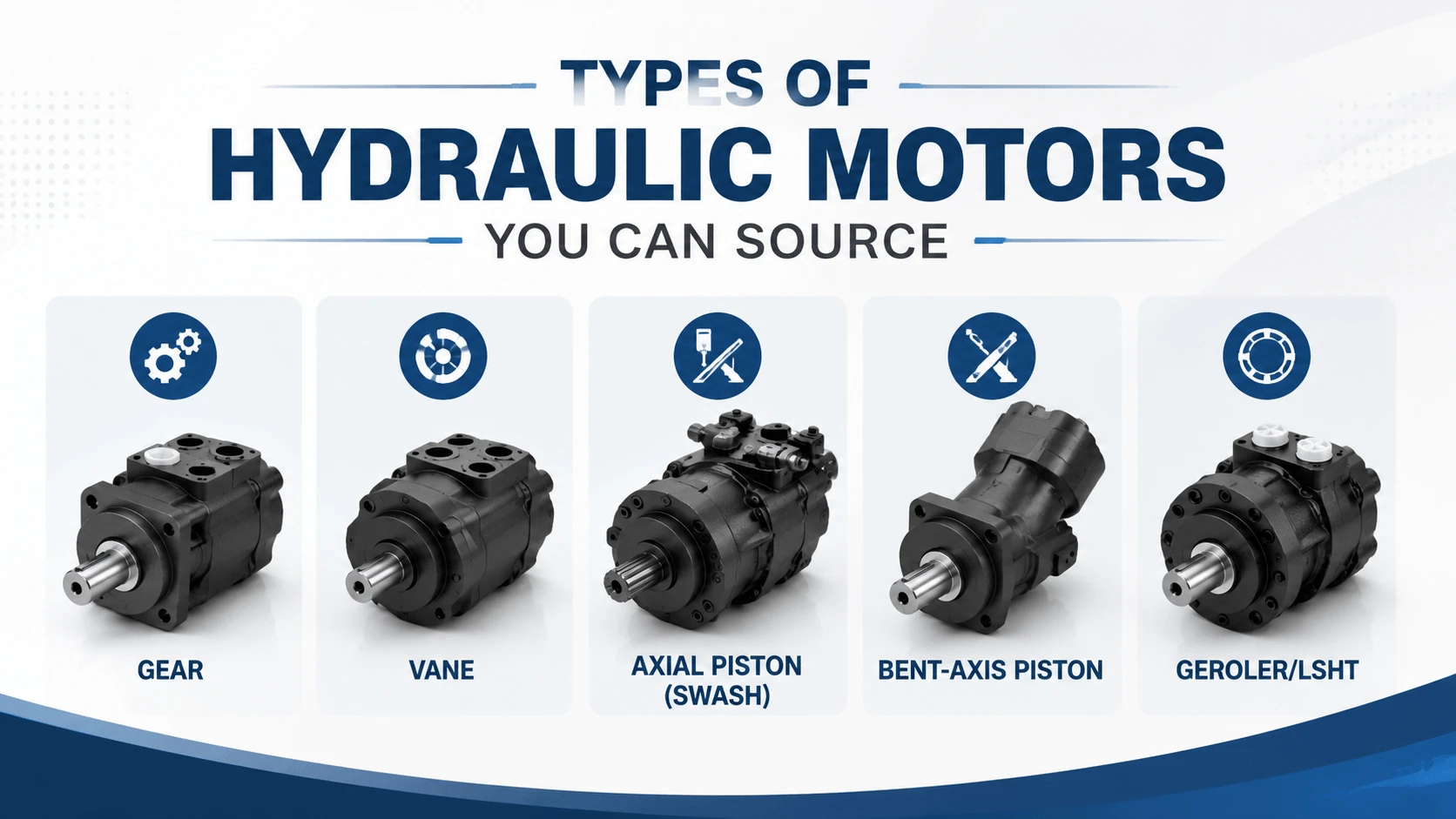
| Type | Pressure | Speed | Efficiency | Best for |
|---|---|---|---|---|
Gear |
100–250 bar |
500–3,000 rpm |
80–90% |
Low-cost conveyors, fans |
Vane |
100–210 bar |
100–4,000 rpm |
85–92% |
Quiet industrial drives |
Axial piston (swash) |
250–450 bar |
500–5,000 rpm |
92–98% |
Mobile machinery, winches |
Bent-axis piston |
350–700 bar |
1,000–8,000 rpm |
95–98% |
Dynamometers, marine |
Geroler / LSHT |
150–350 bar |
10–500 rpm |
75–88% |
Wheel drives, augers |
How Hydraulic Motor Factories Differ
Key Specifications to Specify When Sourcing
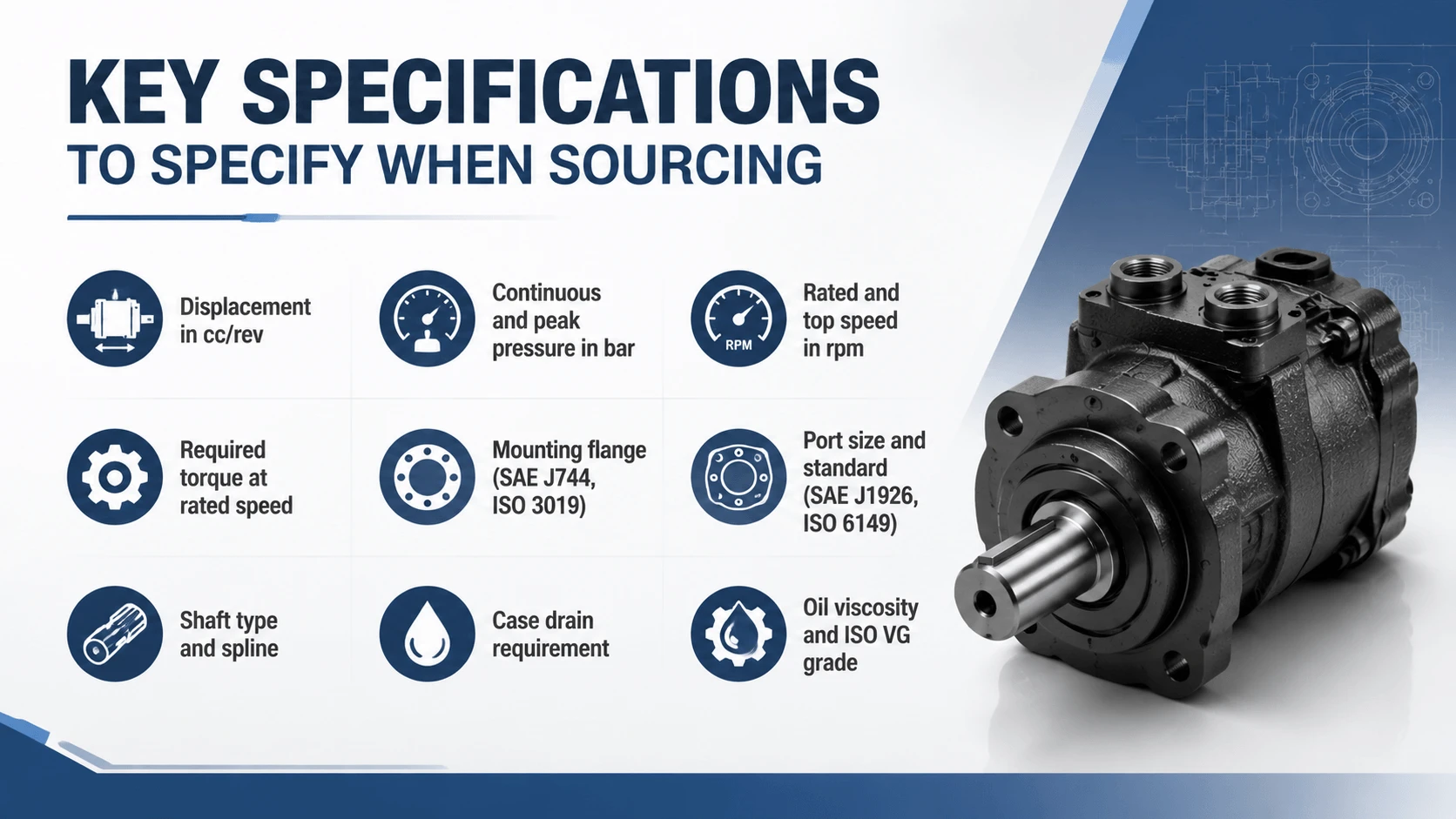
When you approach hydraulic motor manufacturers, bring a spec sheet. Vague quotes get vague motors.
List these numbers on one page:
- Displacement in cc/rev
- Continuous and peak pressure in bar
- Rated and top speed in rpm
- Required torque at rated speed
- Mounting flange (SAE J744, ISO 3019)
- Port size and standard (SAE J1926, ISO 6149)
- Shaft type and spline
- Case drain requirement
- Oil viscosity and ISO VG grade
The best hydraulic motor manufacturers will push back on anything unrealistic. If a supplier agrees to every number without a question, treat that as a warning, not a win.
How to Evaluate a Hydraulic Motor Maker
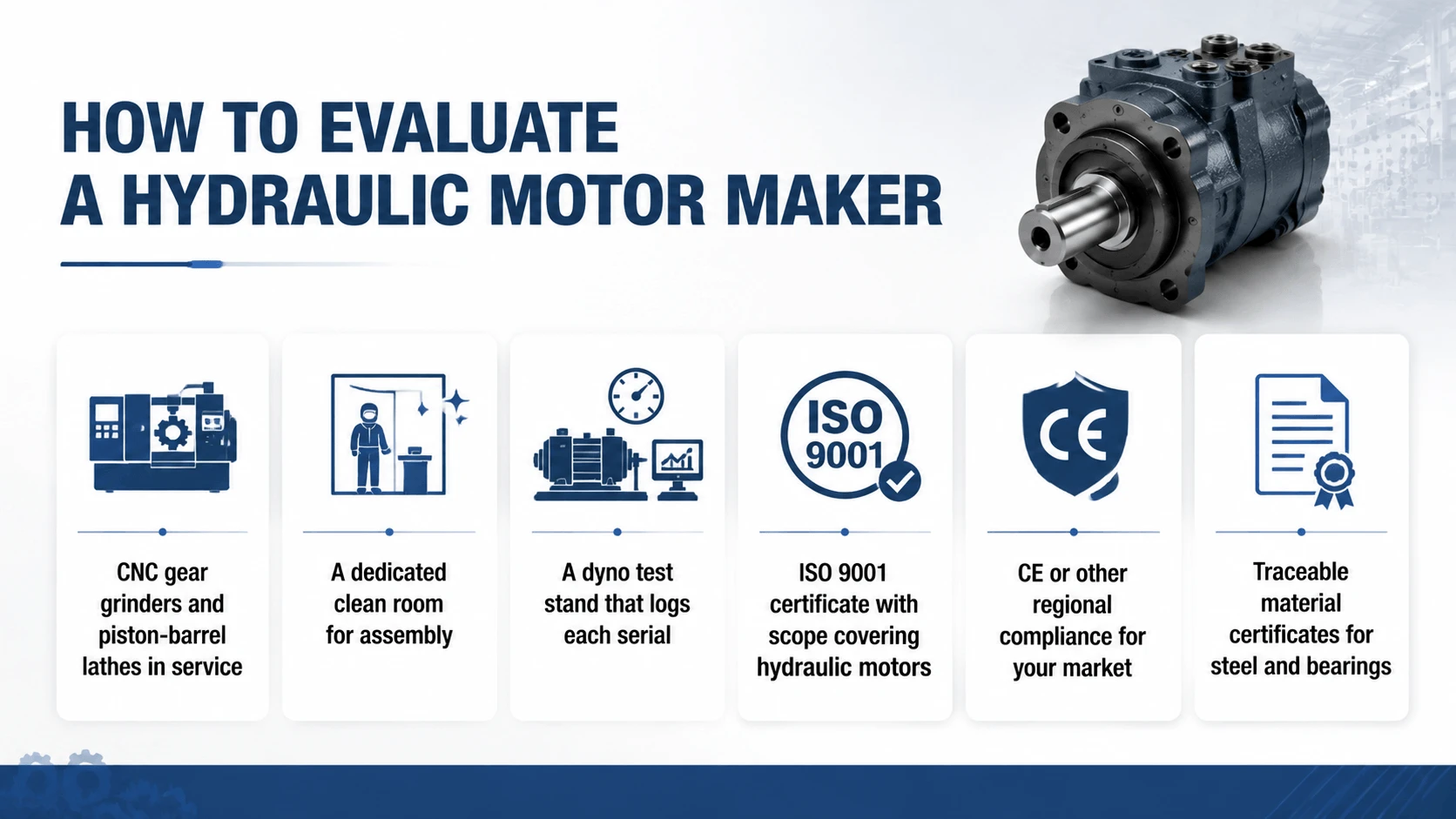
A factory tour tells you more than a website. If you cannot visit, ask for a video call on the shop floor. Look at the machines, the cleanliness, and the test area.
Check these points during the call:
- CNC gear grinders and piston-barrel lathes in service
- A dedicated clean room for assembly
- A dyno test stand that logs each serial
- ISO 9001 certificate with scope covering hydraulic motors
- CE or other regional compliance for your market
- Traceable material certificates for steel and bearings
Ask for three customer references in your industry. Call them. A maker with happy repeat buyers beats a glossy brochure every time.
Quality Control and Testing at the Factory
Reputable hydraulic motor manufacturers test every unit, not a sample. The standard sequence runs the motor at rated speed and pressure. It measures leakage, checks for noise, and logs the torque output.
A clean test report lists serial number, test date, running pressure, flow, rpm, and case drain volume. The drain volume matters. It tells you how much the motor leaks internally. High drain flow means worn clearances or poor assembly.
Contamination control during build matters just as much. The assembly area should meet ISO 4406 cleanliness targets. Dirt packed into a new motor cuts its life in half before it ever turns.
Certifications and Standards That Matter
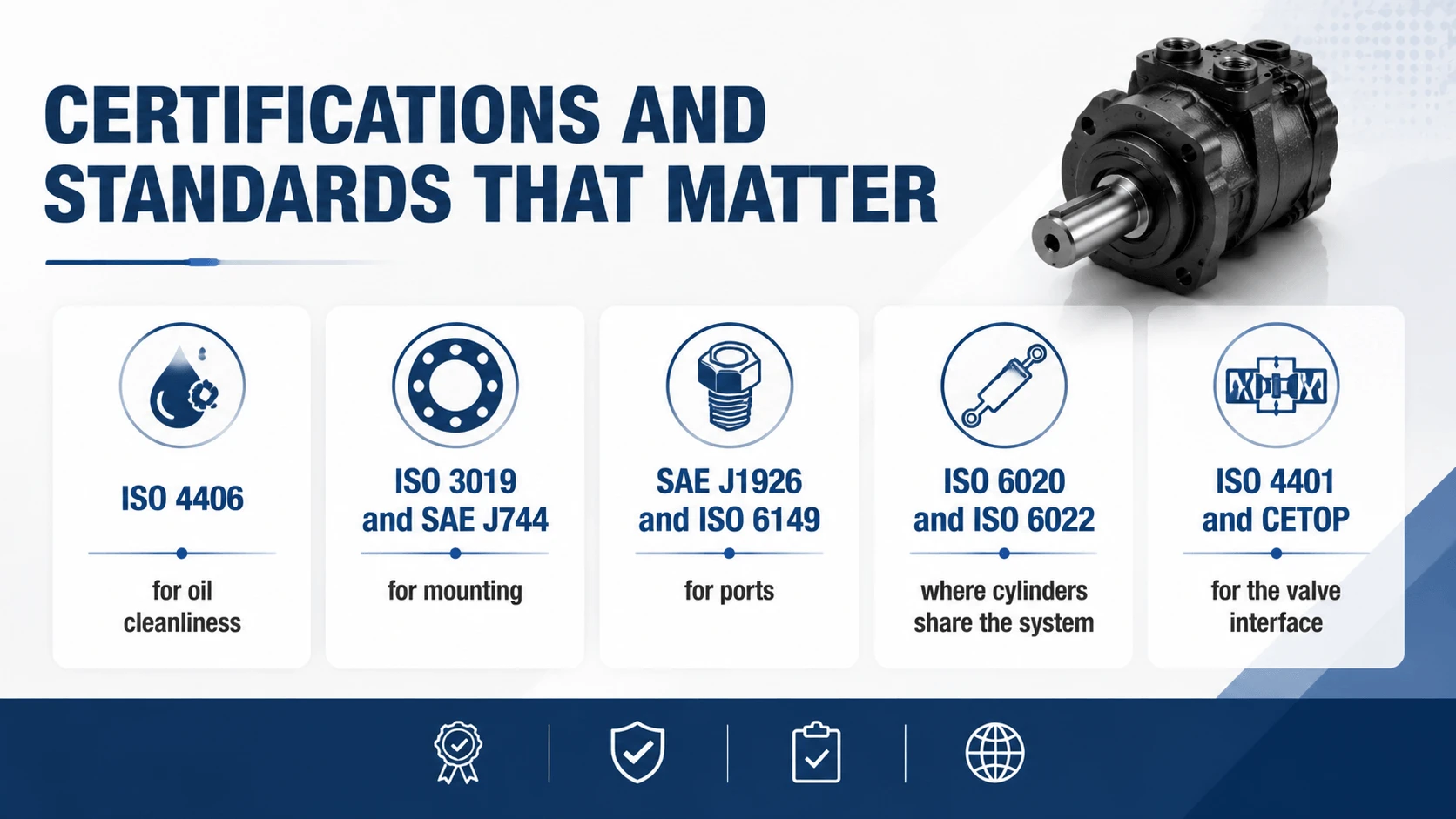
Certifications separate real factories from traders. The minimum to ask for is ISO 9001. For Europe, you need CE marking and a Declaration of Conformity. For North America, look for UL or CSA where electrical accessories ship with the motor.
Industry standards also apply to the build:
- ISO 4406 for oil cleanliness
- ISO 3019 and SAE J744 for mounting
- SAE J1926 and ISO 6149 for ports
- ISO 6020 and ISO 6022, where cylinders share the system
- ISO 4401 and CETOP for the valve interface
A maker who cites the right standards in the quote shows engineering fluency. One who shrugs at the question does not.
OEM, ODM, and Custom Manufacturing
These factories offer three buying models. OEM means you buy their standard motor with their label. ODM means they build to your design and put your label on it. Custom means a one-off motor engineered for your application.
OEM suits buyers who need a known part fast. ODM works when you want brand control without owning the factory. Custom pays off when no standard motor fits your envelope or pressure target. Custom costs more and takes longer, but it removes every compromise.
Pick the model by volume and lead time. Low volume and short timelines point to OEM. High volume and brand goals point to ODM. A unique pressure or size target points to custom.
MOQ, Lead Time, and Pricing Reality
Minimum order quantity swings wildly between hydraulic motor manufacturers. A trading company may ship one unit. A real factory often sets the MOQ at 50 or 100 units to justify a production run.
Lead time runs four to twelve weeks for standard parts and twelve to twenty weeks for custom. Pricing follows volume, not just type. A bent-axis piston motor at 10 units might cost three times its price at 1,000 units. Get quotes at your real annual volume, not at a sample size.
Watch the price that looks too low. It usually means softer steel, thinner bearings, or skipped testing. The motor costs less to build and fails sooner in the field.
Geographic Sourcing: China, Europe, and the US
Sourcing geography changes the trade-offs, not the physics. European and US makers like Danfoss, Parker, Bosch Rexroth, and Eaton lead on engineering and support. You pay for it in price and lead time.
Chinese factories have closed much of the quality gap. The better ones hold ISO 9001, run full dyno testing, and supply global OEMs. Price runs 30 to 60% lower for equivalent specs. The risk is variance between suppliers, so vetting matters more here.
A hybrid split works well. Source standard gear and vane motors offshore. Keep critical piston motors or custom units with a brand you can audit in person.
Common Problems When Buying from Manufacturers
The repeated failures come from the same roots. Soft gears that scuff after weeks of run-in. Housings bored loose so efficiency drops fast. Bearings sized too small for the load so the shaft walks and the seal leaks. Missing test reports that hide all of the above.
Shipping damage is another. A motor without a proper plug in the ports ships dirt and water into the rotating group. Specify sealed ports and a desiccant pack in the crate.
Counterfeit labeling happens in the grey market. A motor stamped with a famous brand may have come from an unknown shop. Buy direct or through an authorized distributor. The discount is not worth the downtime.
How to Select the Right Manufacturer for Your Application
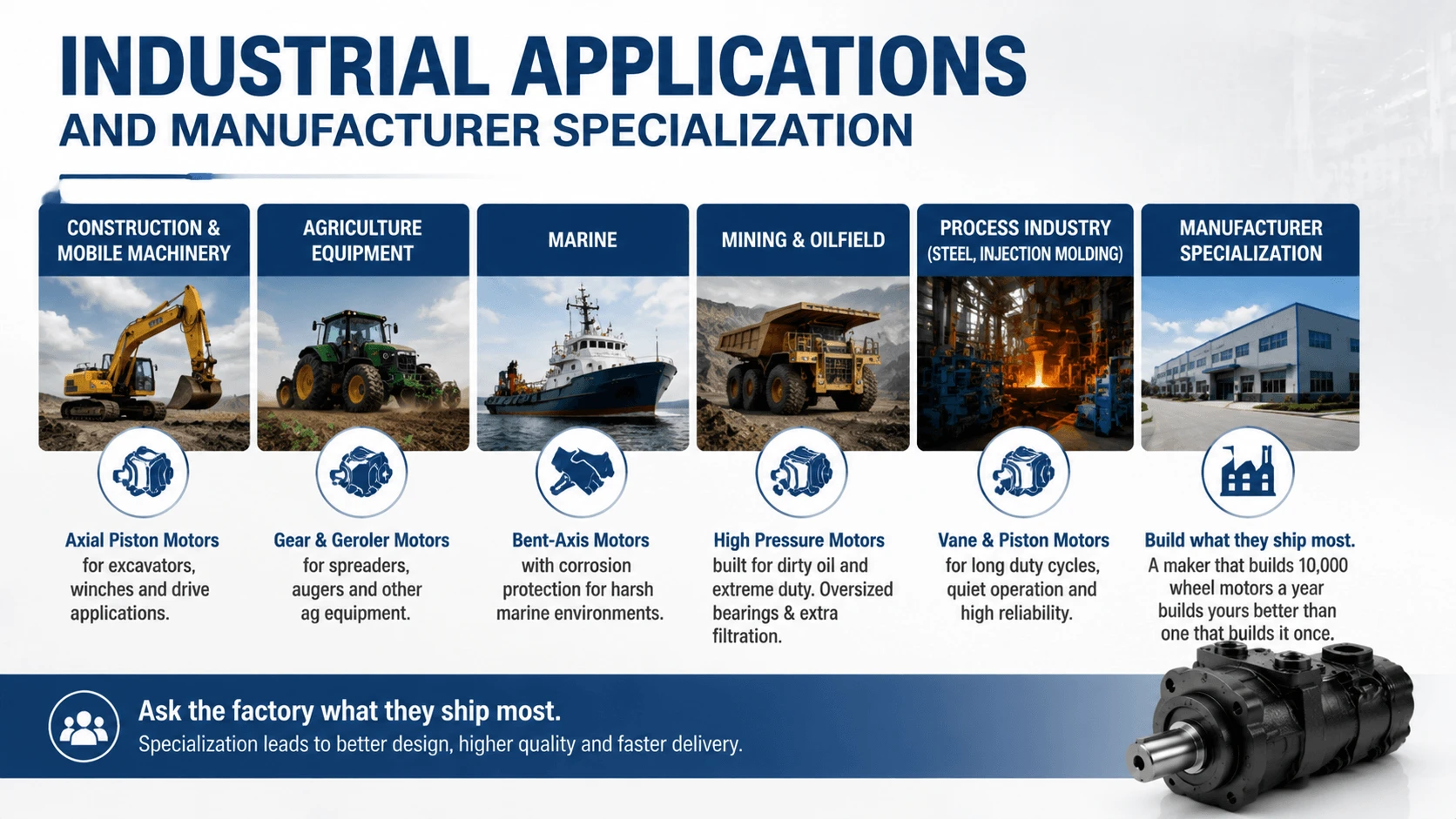
Match the supplier to the job. For a conveyor gear motor, a cost-driven offshore factory with ISO 9001 is enough. For a marine propulsion bent-axis unit, pick a maker with a track record in that environment and salt-spray test data.
For a test rig dynamometer, you need a maker who understands closed-loop control and case drain management. A general gear-motor shop will quote the part and miss the application.
Write a one-page sourcing brief. It should carry your load torque, speed, duty cycle, environment, mounting, ports, and target price. Send it to three vetted suppliers. Compare the questions they ask back. The supplier with the sharpest questions usually builds the best motor.
Industrial Applications and Manufacturer Specialization
FAQ
How do I find a reliable hydraulic motor supplier?
Look for ISO 9001, a real factory with CNC gear grinding and dyno testing, and a per-unit test report. Add customer references in your industry and a video call on the shop floor. A maker who hides the factory is a maker you cannot trust.
What types of hydraulic motors do factories build?
Most build gear, vane, axial piston, and bent-axis piston types. Some specialize in low-speed, high-torque geroler or radial piston motors. A few focus on a single family, like marine bent-axis units. Ask what they ship most before you commit.
How do I verify a manufacturer before buying?
Ask for ISO 9001 scope, a video tour of the assembly and test area, material certificates, and three customer references. Require a test report with each motor’s serial number. If the factory will not show the test stand, walk away.
What is a realistic MOQ from a hydraulic motor factory?
Trading companies ship single units. Real factories often set 50 to 100 units for a production run. Custom motors may need a higher volume to cover tooling. Sample orders of one to five units usually carry a premium.
How long does production take?
Standard motors ship in four to twelve weeks. Custom designs take twelve to twenty weeks, depending on engineering and tooling. Add shipping time and customs clearance for offshore orders.
What certifications should a hydraulic motor manufacturer have?
ISO 9001 as a minimum. CE and a Declaration of Conformity for Europe. UL or CSA, where the motor ships with electrical accessories. Industry standards like ISO 4406, SAE J744, and ISO 6149 show engineering fluency.
Are Chinese hydraulic motor suppliers reliable?
The better ones are. Top Chinese factories hold ISO 9001, run full dyno testing, and supply global OEMs. Price runs 30 to 60% lower than Western brands. The variance between suppliers is wider, so vetting matters more.
How do I avoid counterfeit motors?
Buy direct from the manufacturer or through an authorized distributor. Avoid grey-market brokers offering famous brands at steep discounts. Check serial numbers against the maker’s records when the shipment arrives.
What specs must I send to get an accurate quote?
Send these on one page:
- Displacement and rated speed
- Continuous and peak pressure
- Required torque and mounting flange
- Port size, standard, and shaft type
- Case drain needs and oil viscosity
A one-page sourcing brief beats a long email thread.
Conclusion
A good hydraulic motor supplier is worth more than a cheap one. The discount you save at purchase comes back as downtime, seal leaks, and warranty claims. The right factory tests every unit, cites the right standards, and asks sharp questions about your load.
Bring a real spec sheet. Vet three suppliers. Compare what they ask back, not just what they charge. Source standard parts offshore and keep critical or custom motors with a maker you can audit. The math is straightforward. The discipline is what separates a motor that runs for years from one that fails before the warranty expires.