
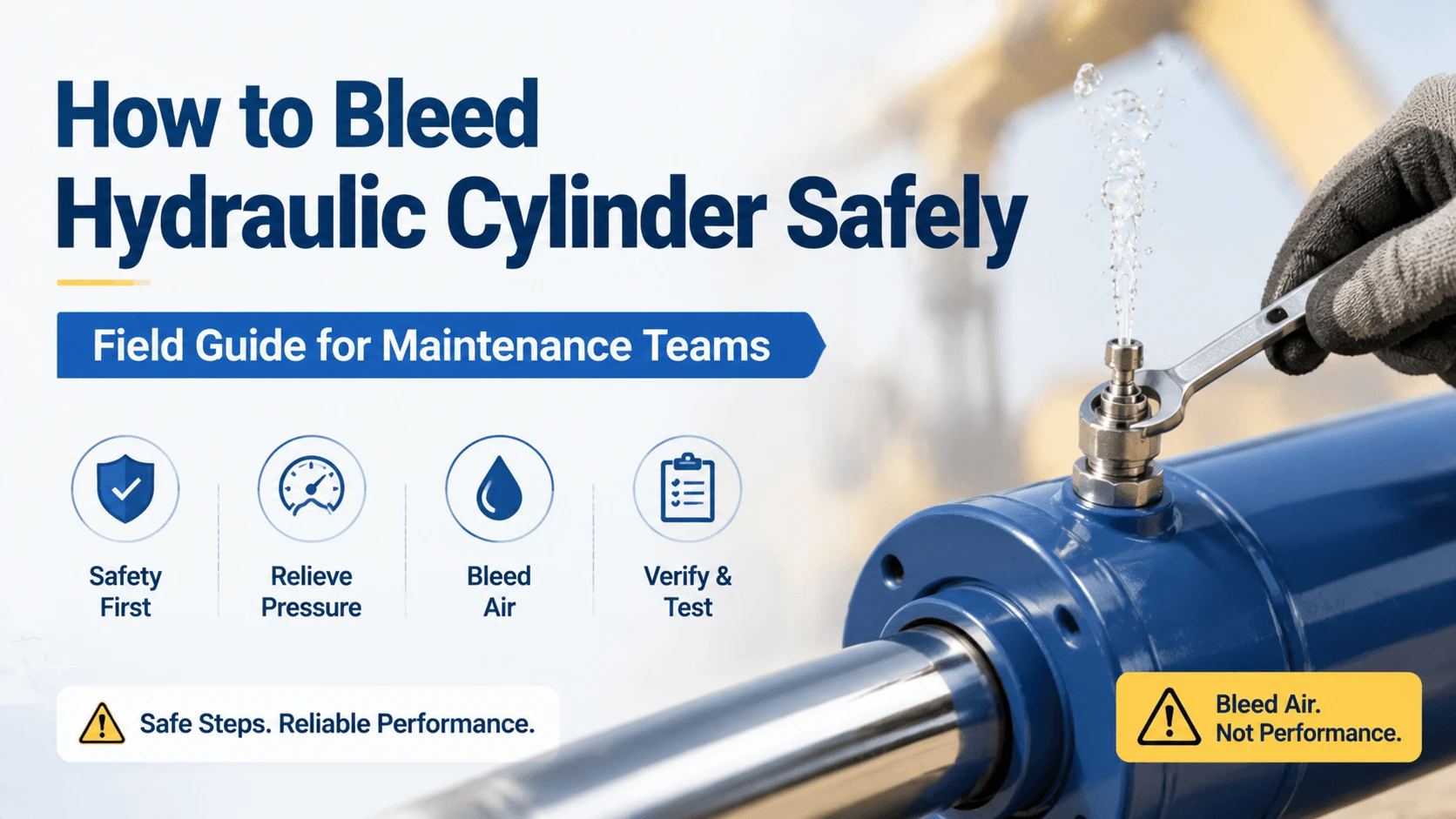
Most people search how to bleed hydraulic cylinder after a repair goes slightly wrong. The rod jumps. The load chatters. The pump sounds sharper than usual. In many cases, air entered the cylinder during hose replacement, seal work, oil change, or storage.
Air compresses, oil barely does. That small difference can make a strong cylinder feel weak, noisy, or slow. This guide to how to bleed hydraulic cylinder systems keeps the job practical, with enough detail for shop maintenance and field service.
Quick Answer: How to Bleed Hydraulic Cylinder
To remove air, secure the machine, support the load, fill the reservoir, relieve pressure, open the correct bleed point, and cycle the cylinder slowly. Keep the rod end higher when possible. Close the bleed point once clean oil flows without foam. That is the short version of how to bleed a hydraulic cylinder safely.
Never chase a hydraulic leak with your hand. A fine jet of oil can pierce skin. Lock the machine down, use cardboard or wood for leak checks, and follow the equipment maker’s service steps.
Why Air Causes So Much Trouble
A hydraulic cylinder converts oil pressure into a straight-line force. The piston area and system pressure decide the available push or pull. Many mobile machines run around 140 to 280 bar, while heavier industrial systems can run higher.
Air changes the feel of that force. It compresses under load, then expands when the valve shifts. The operator sees jerky motion, spongy response, heat, foam in the tank, or rod drift that looks like a seal problem.
I have seen teams replace seals too early because the cylinder looked weak. A slow bleed fixed the motion. The seal kit stayed on the shelf.
When You Need to Bleed the Cylinder
Bleed the cylinder after hose replacement, cylinder overhaul, rod seal work, pump replacement, oil change, or long storage. New equipment may need it too, especially after shipping with ports capped and oil drained.
You should also suspect air when the cylinder moves in short jumps. A sharp knocking sound near the end of stroke can point the same way. Foamy oil in the sight glass gives another clue.
Do not use bleeding as a cure for every slow cylinder. Low pump flow, blocked filters, relief valve faults, worn piston seals, or tight guides can create similar symptoms.
Tools and Safety Checks
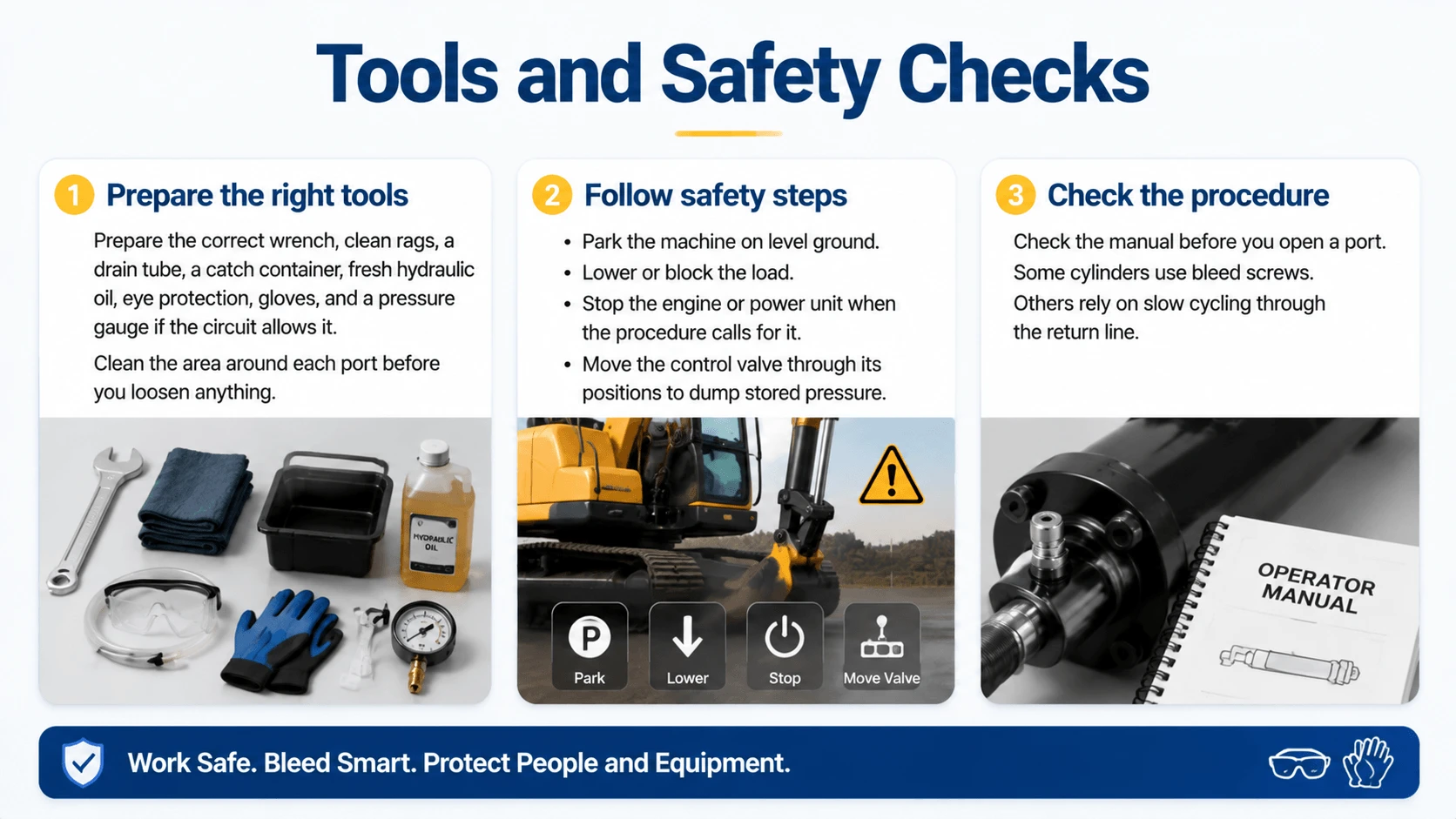
Prepare the correct wrench, clean rags, a drain tube, a catch container, fresh hydraulic oil, eye protection, gloves, and a pressure gauge if the circuit allows it. Clean the area around each port before you loosen anything.
Park the machine on level ground. Lower or block the load. Stop the engine or power unit when the procedure calls for it. Move the control valve through its positions to dump stored pressure.
Check the manual before you open a port. Some cylinders use bleed screws. Others rely on slow cycling through the return line.
How to Bleed Hydraulic Cylinder on Single-Acting Units
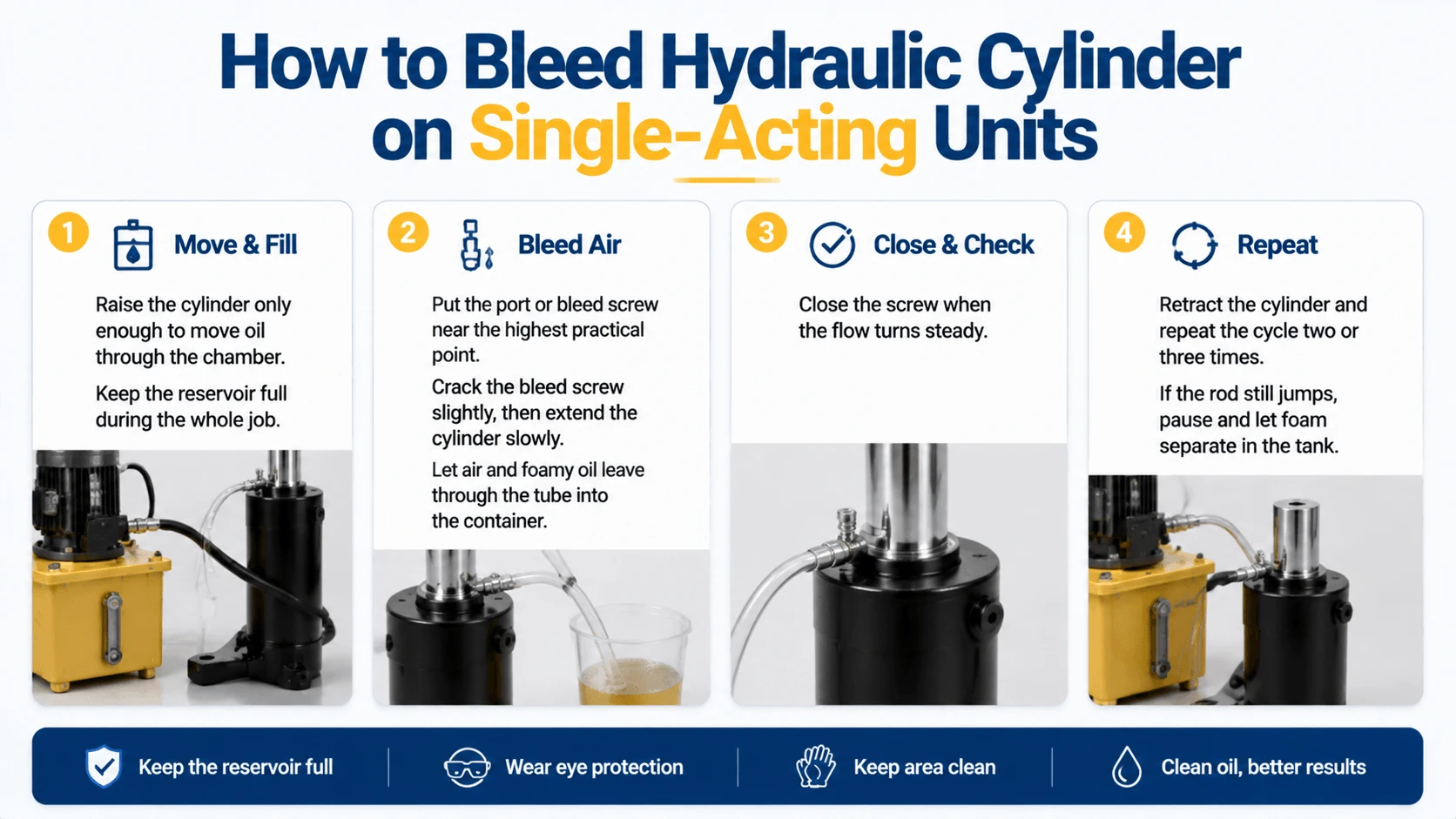
A single-acting cylinder uses pressure in one direction and gravity or a spring for return. Raise the cylinder only enough to move oil through the chamber. Keep the reservoir full during the whole job.
Put the port or bleed screw near the highest practical point. Crack the bleed screw slightly, then extend the cylinder slowly. Let air and foamy oil leave through the tube into the container.
Close the screw when the flow turns steady. Retract the cylinder and repeat the cycle two or three times. If the rod still jumps, pause and let the foam separate in the tank.
How to Bleed Hydraulic Cylinder on Double-Acting Units
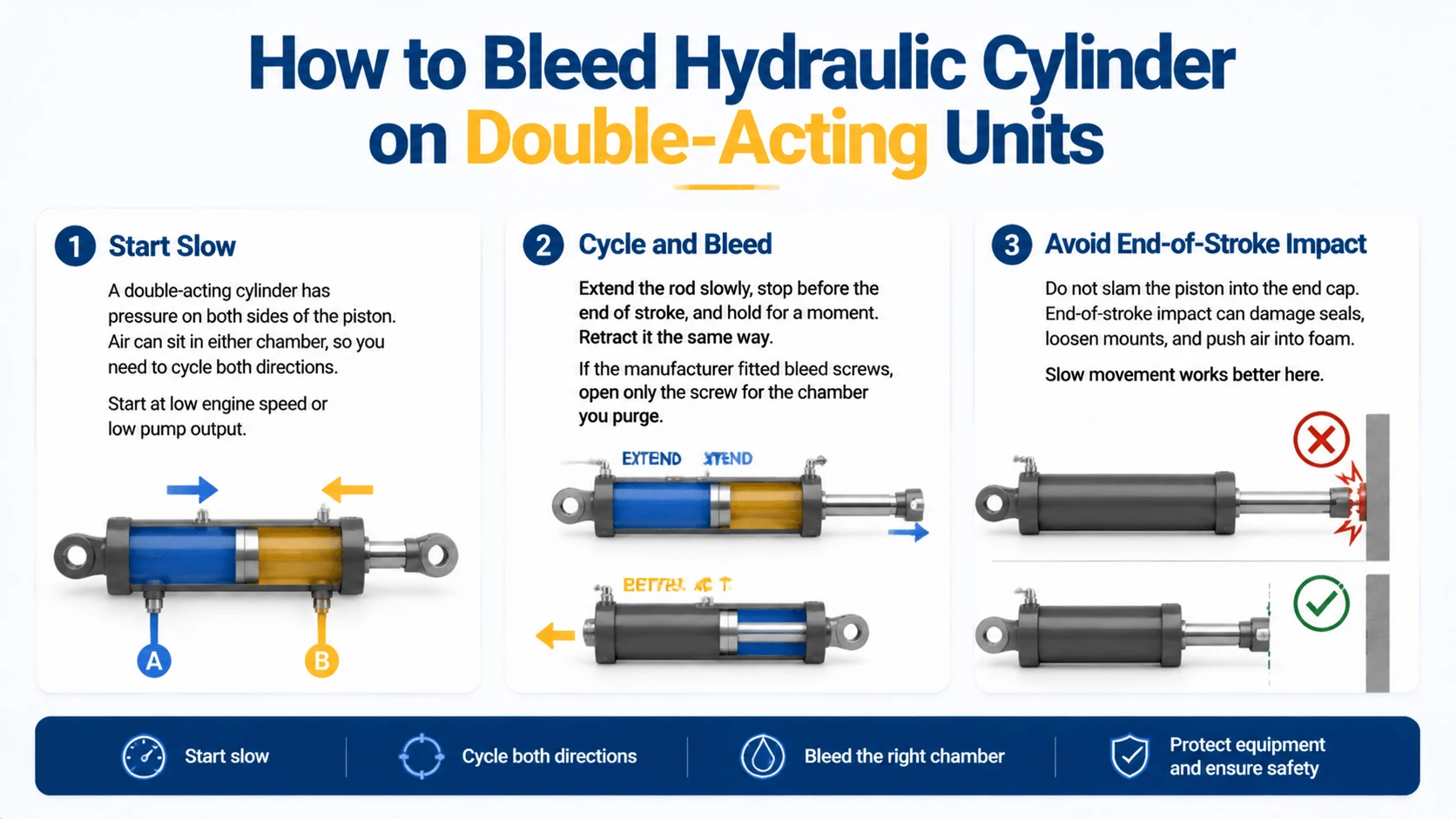
A double-acting cylinder has pressure on both sides of the piston. Air can sit in either chamber, so you need to cycle both directions. Start at low engine speed or low pump output.
Extend the rod slowly, stop before the end of stroke, and hold for a moment. Retract it the same way. If the manufacturer fitted bleed screws, open only the screw for the chamber you purge.
Do not slam the piston into the end cap. End-of-stroke impact can damage seals, loosen mounts, and push air into foam. Slow movement works better here.
If There is No Bleed Screw
Many cylinders have no bleed screw. In that case, use controlled cycling. Fill the tank, run the pump at low speed, and move the cylinder through partial strokes first.
Increase stroke length as the motion smooths out. Keep watching the oil level. If the pump pulls air from a low tank, you will add a new problem while fixing the old one.
Give the reservoir time between cycles when oil looks milky. Air needs quiet time to separate from oil.
Common Mistakes to Avoid When Learning How to Bleed Hydraulic Cylinder
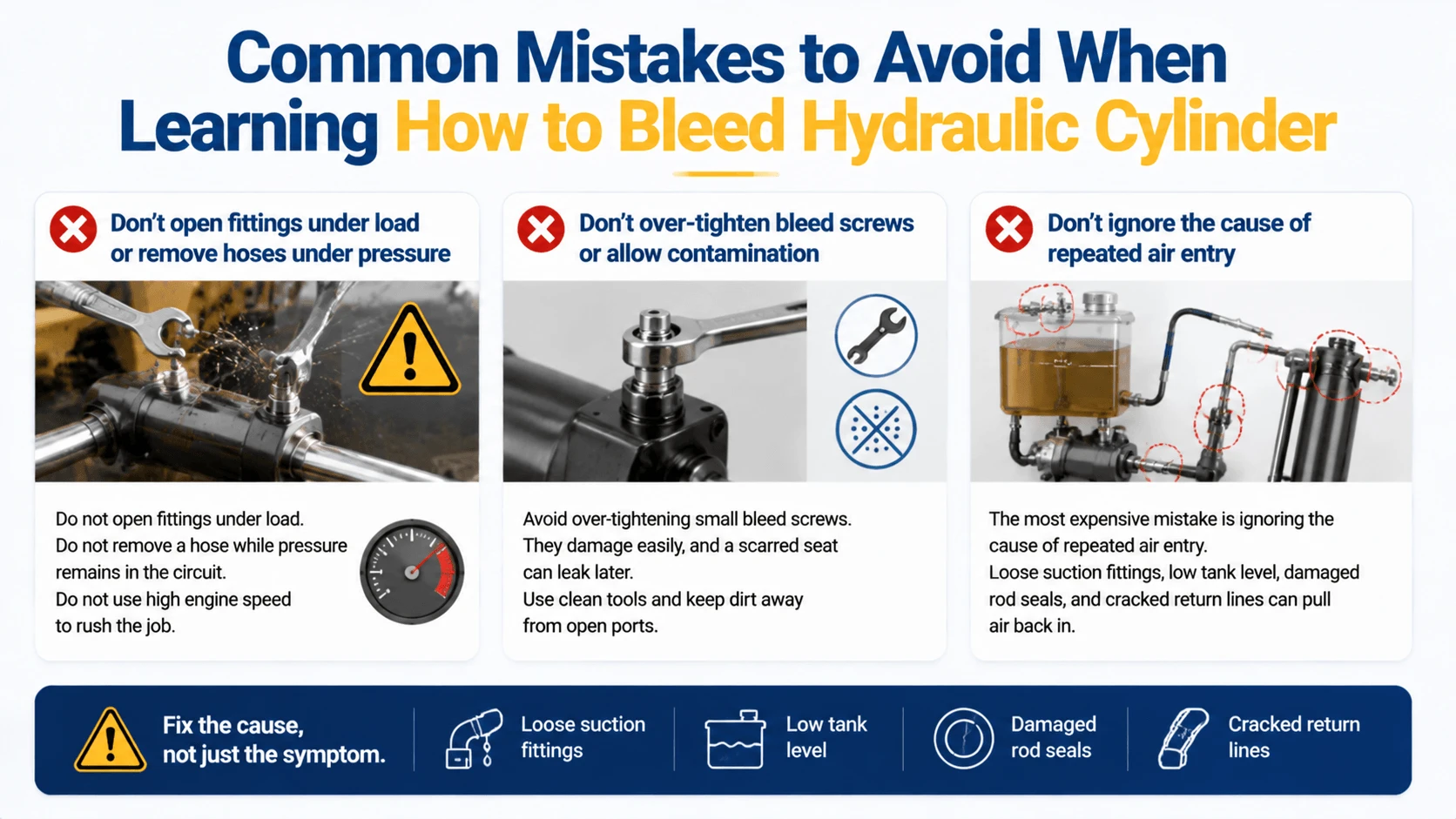
Do not open fittings under load. Do not remove a hose while pressure remains in the circuit. Do not use high engine speed to rush the job.
Avoid over-tightening small bleed screws. They damage easily, and a scarred seat can leak later. Use clean tools and keep dirt away from open ports.
The most expensive mistake is ignoring the cause of repeated air entry. Loose suction fittings, low tank level, damaged rod seals, and cracked return lines can pull air back in.
Troubleshooting After Bleeding
If the cylinder still chatters, check the oil level, suction line, return filter, and pump inlet. Aeration often starts before the oil reaches the cylinder.
If the cylinder drifts under load, test for internal bypass across the piston seal. Air can hide the issue at first, but a warm cylinder barrel often tells the story.
If pressure stays low, check the relief valve and pump output. Bleeding will not restore force when the circuit cannot build pressure.
Maintenance Tips That Prevent Air Problems
Keep the reservoir filled to the correct mark. Change filters on schedule, not only after the machine acts up. Inspect suction hoses for cracks, loose clamps, and flattened sections.
Clean rod surfaces matter too. A damaged rod can cut the rod seal, and that seal can let air enter during retraction. Small scratches deserve attention before they become downtime.
Use the oil grade the manufacturer specifies. Oil that runs too thick can starve the pump inlet during cold starts. Oil that runs too thin may leak past worn clearances.
Procurement Notes for Replacement Cylinders
When buying a replacement cylinder, match bore, rod diameter, stroke, mounting style, port size, seal material, and pressure rating. A cylinder that fits the pins may still perform poorly.
Ask the supplier about test pressure, seal options, surface finish, and spare seal availability. For dusty, wet, or high-cycle equipment, these details matter more than a small price difference.
If a customer asks how to bleed hydraulic cylinder after every installation, review the port position and mounting angle. The design may trap air at the high end.
Conclusion
Once a technician learns how to bleed hydraulic cylinder properly, the job becomes routine. The real skill sits in the judgment around it.
Bleed slowly, keep oil clean, respect pressure, and watch what the cylinder tells you after the air leaves. If the same fault returns, stop treating the symptom and trace the air path back to its source.
FAQ
Can air damage a hydraulic cylinder?
Air can cause heat, foam, jerky motion, and poor control. It can also make operators misdiagnose seal or pump problems.
Should I bleed a cylinder at full engine speed?
No. Use low speed and slow valve movement. Fast cycling can turn trapped air into foam.
Why does the cylinder still jump after bleeding?
Check oil level, suction leaks, clogged filters, pump inlet restriction, and piston seal bypass.
Can I loosen a hose to remove air?
Only follow the equipment maker’s procedure. Loosening hoses under pressure creates serious injection and crush hazards.
Authority Sources
- ISO 4413 hydraulic fluid power safety requirements
- OSHA hydraulic systems modification safety bulletin
- OSHA hydraulic fluid injection accident example