Introduction
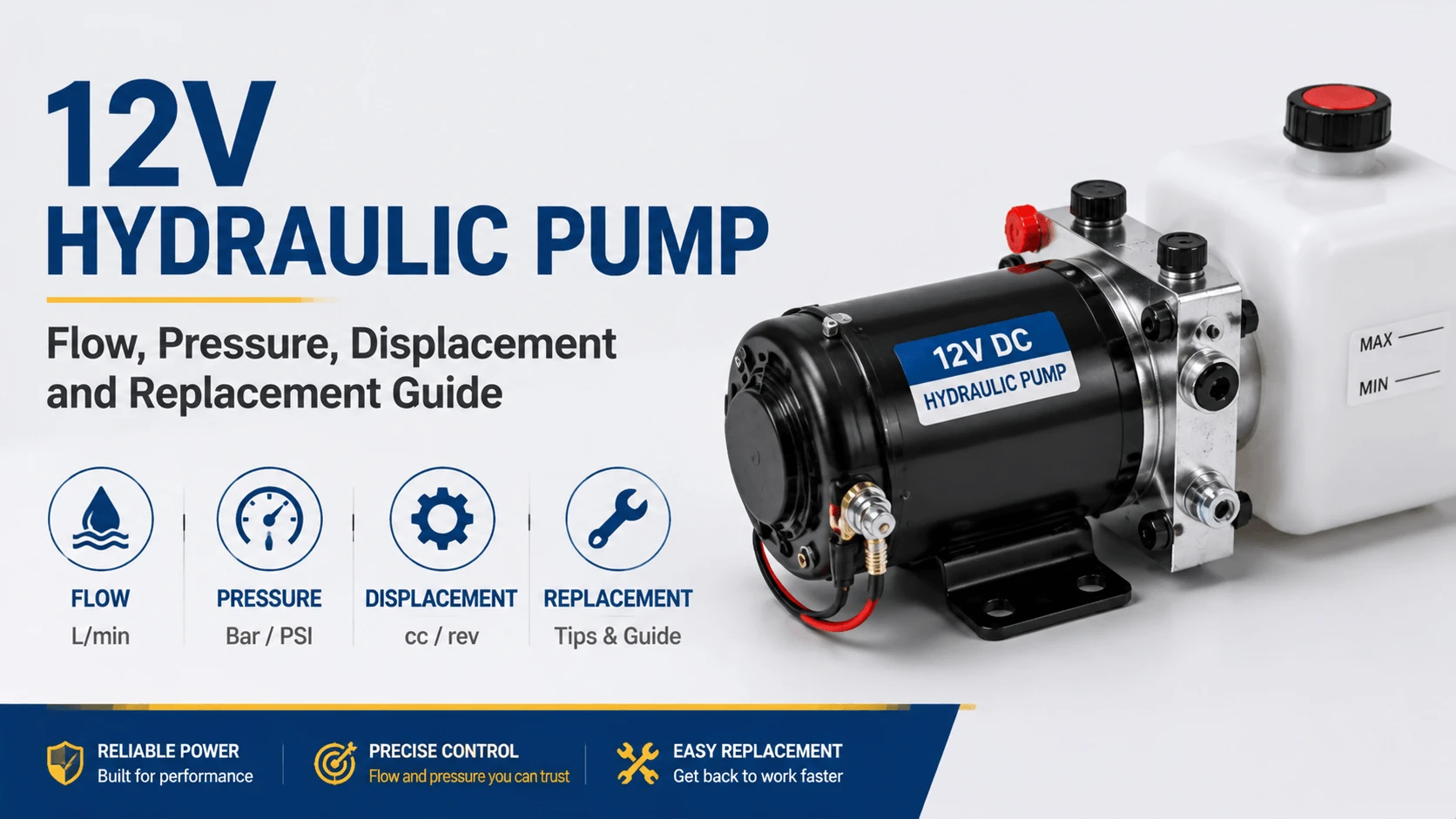
A 12v hydraulic pump is the part that actually moves the oil in a DC power unit. The motor, reservoir, and valves matter, but the pump sets the flow and pressure you get. Most of these pumps are external gear types, and they hide inside dump trailer units, lift-gate packs, and snow plow systems.
Buyers often confuse the pump with the whole power unit. This guide separates the two. We focus on the pump itself: displacement, flow at pressure, volumetric efficiency, and when to replace just the pump instead of the entire assembly.
What is a 12V Hydraulic Pump?
A 12v hydraulic pump is a fixed-displacement gear pump driven by a 12-volt DC motor. The pump spins at 2500 to 4000 rpm, pulls oil from a small reservoir, and feeds a directional valve. A relief valve caps the pressure, usually between 150 and 207 bar.
The pump itself is just the gear set and housing. The motor, tank, and valves are separate parts. You can buy a replacement pump alone, or you can buy the whole assembly.
Nearly every 12V unit uses an external gear pump. Internal gear and gerotor types appear in a few quiet models, but external gear dominates because it is cheap and tolerant of contamination.
The motor turns the drive gear. That gear meshes with a second driven gear. Oil fills the spaces between the teeth and the housing wall, then travels from the inlet to the outlet side. The meshing teeth force the oil out.
Output flow tracks pump speed. Double the speed, and you roughly double the flow. Pressure does not come from the pump itself. Pressure comes from the load resisting that flow, until the relief valve opens.
Inside the pump, a thin film of oil separates the gear tips from the housing wall. As pressure rises, that film thins and internal leakage grows. That leakage is why the flow drops at higher pressure.
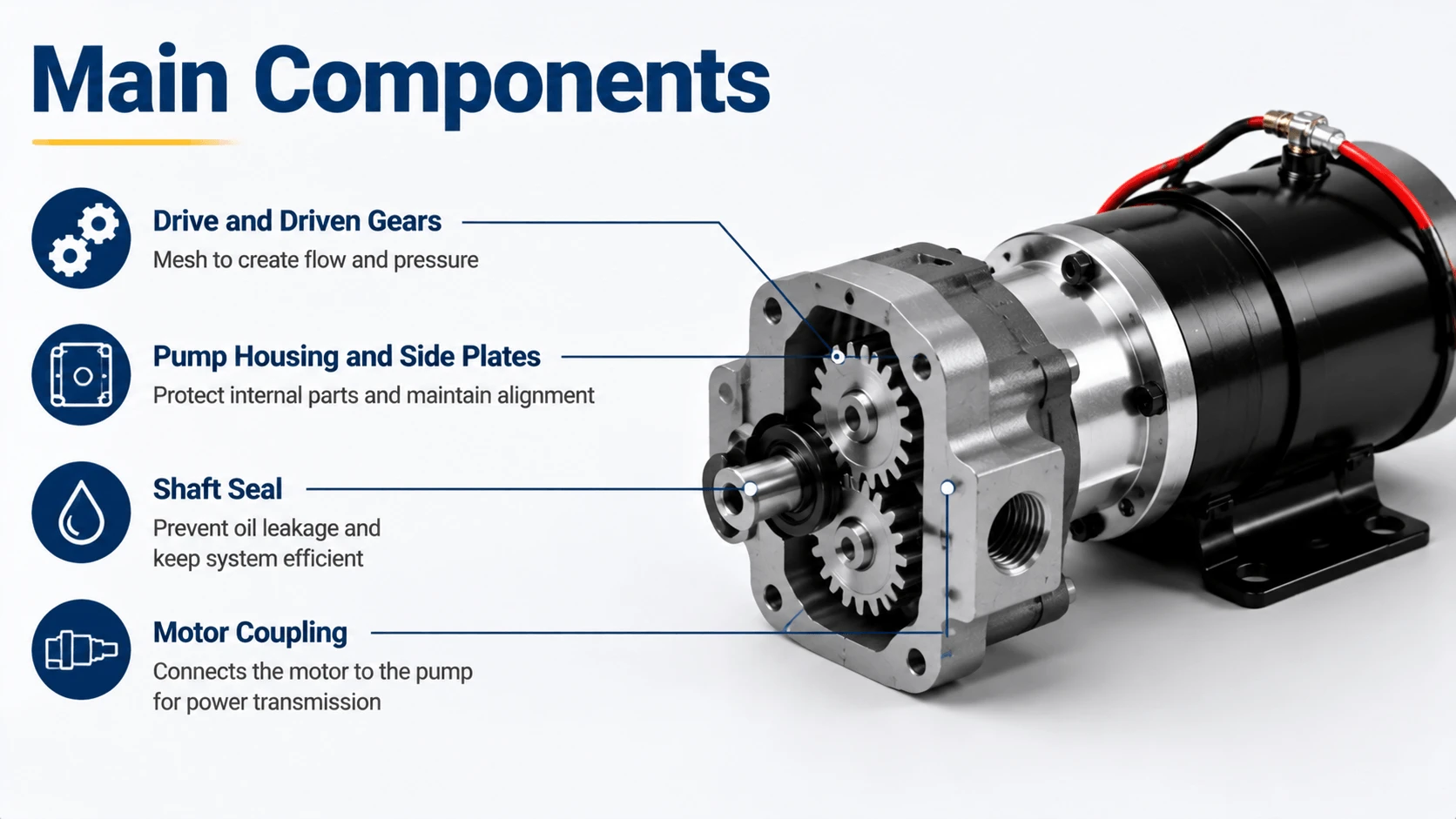
Drive and Driven Gears
The two gears form the core of the pump. They run on shafts supported by bushings or needle bearings. The drive gear shaft connects to the motor through a coupling. Most gear sets are steel or sintered iron.
Gear width and tooth count set the displacement. A wider gear or more teeth moves more oil per revolution. Typical displacement ranges from 0.5 to 3.5 cc per revolution.
Pump Housing and Side Plates
The housing holds the gears with tight side clearance. Side plates, sometimes bronze, take the thrust load and wear first. A worn housing shows up as rising internal leakage and falling flow at pressure.
Housing material is usually cast aluminum or cast iron. Aluminum keeps weight down for trailer use. Iron handles higher pressure and lasts longer in continuous duty.
Shaft Seal
The shaft seal keeps oil in and dirt out. It rides on the drive shaft and leaks when worn or hardened. A weeping shaft seal often signals a blocked breather or excess reservoir pressure, not just a bad seal.
Replace the seal when you see oil tracking along the shaft. Running a 12v hydraulic pump with a bad seal pulls dust into the bearings and shortens gear life.
Motor Coupling
The coupling joins the motor shaft to the pump drive gear. Most use a tongue-and-groove or spline fit. A worn coupling causes noise, vibration, and eventual shaft damage.
Check the coupling whenever you separate the pump from the motor. A loose fit will hammer the shaft splines and round off the drive gear teeth over time.
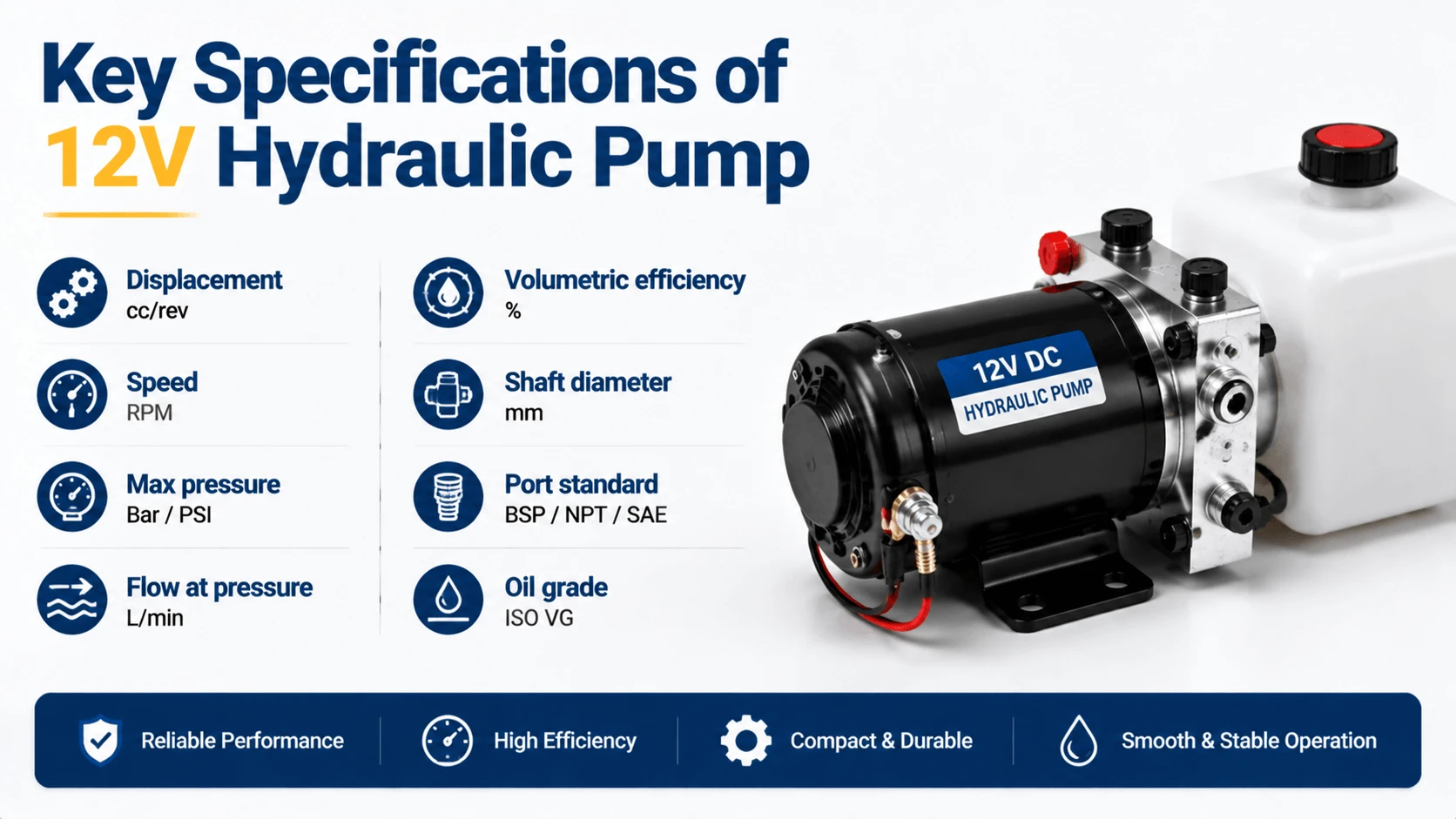
Key Specifications of 12V Hydraulic Pump
Read flow at the pressure you need, not at zero. A pump rated 6 L/min at zero pressure may deliver only 4 L/min at 150 bar.
Flow, Pressure, and Volumetric Efficiency
Theoretical flow equals displacement times speed, divided by 1000. A 2 cc/rev pump at 3000 rpm gives 6 L/min in theory. Real flow runs lower because internal leakage bleeds oil back from the outlet to the inlet.
That leakage grows with pressure. At 50 bar, you might lose 5 percent of flow. At 200 bar, you can lose 15 percent or more. The gap between theoretical and actual flow is volumetric efficiency.
Pressure does something else to the pump. It slows the motor. A PMDC motor that spins 4000 rpm unloaded can drop to 2800 rpm at full load. That speed loss cuts flow a second time.
So real flow is theoretical flow, minus leakage, minus the speed loss from motor loading. This is why a pump that looks fine on paper delivers far less at the cylinder.
A weak battery makes this worse. If the voltage sags from 12.6 V to 10 V under load, the motor speed falls further. The pump is fine, but the flow reading looks like a worn pump.
Sizing a 12V Hydraulic Pump
Three things set your pump choice: force, speed, and the motor that drives it.
Force sets pressure. To push 5000 kg with a 50 mm bore cylinder, you need about 250 bar. That exceeds most 12V pumps, so you increase the bore or move to 24V.
Speed sets flow. To extend a 50 mm cylinder at 50 mm per second, you need about 5.9 L/min at the cylinder. Pick a pump that delivers that flow at your working pressure, not at zero.
Then match the pump to the motor. Pump torque rises with pressure and displacement. A larger displacement pump at 200 bar needs more torque than the same pump at 100 bar. If the motor cannot supply the torque, the speed and flow drop with it.
This torque match is the step most builders skip. A 12v hydraulic pump with too much displacement will stall the motor and trip the overload. One with too little displacement will spin freely but move the load slowly.
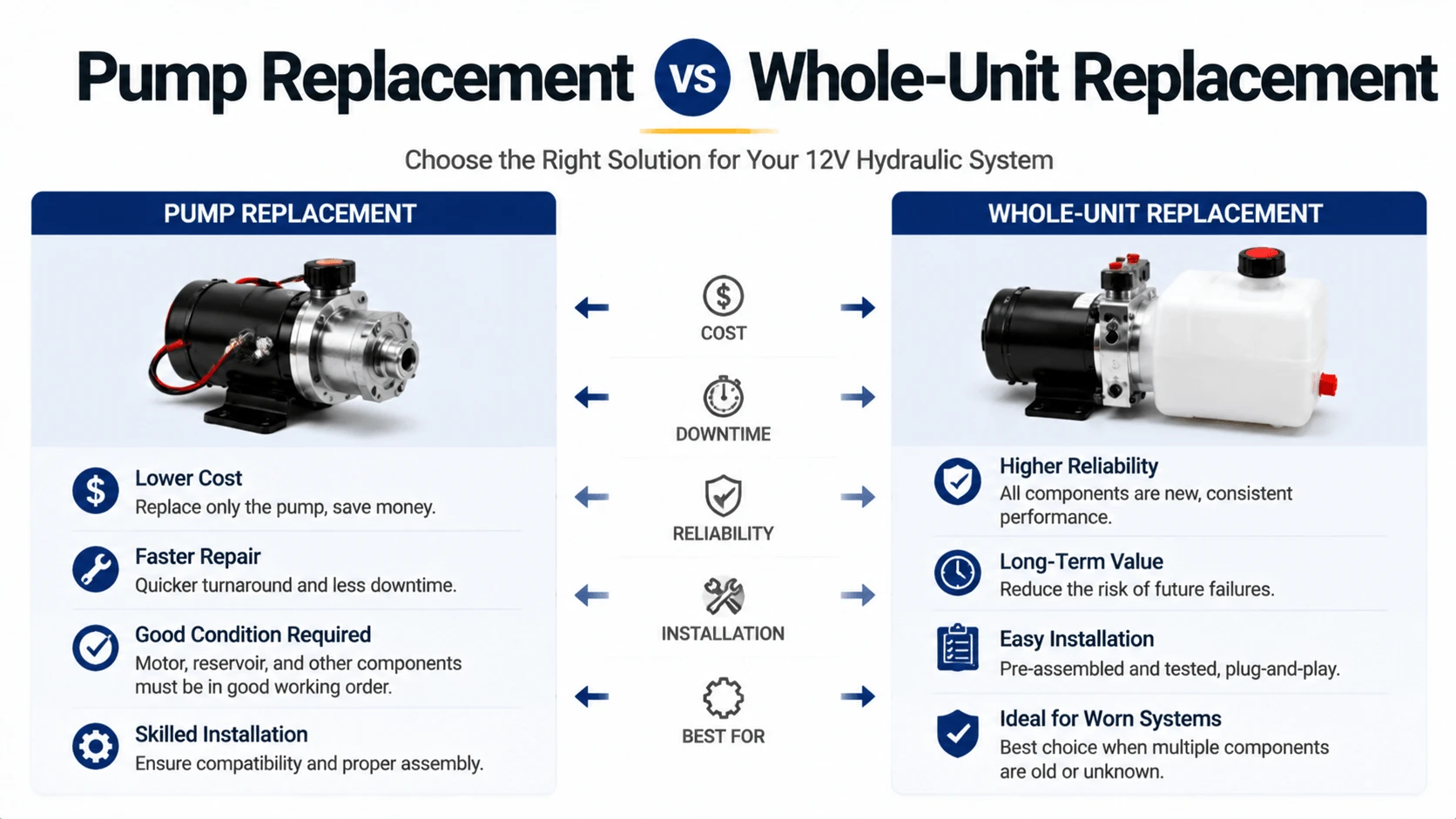
Pump Replacement vs Whole-Unit Replacement
When a unit runs slowly, buyers often replace the whole thing. That is sometimes wrong. If the motor still runs and the reservoir is clean, the pump alone may be the problem.
Measure flow at the working pressure. Compare it to the pump rating. If the flow is down 15 to 20 percent and the pressure is within spec, the pump is worn. Replace the pump.
If the motor draws high current, runs hot, or smells burned, the motor is the problem. Replacing the pump alone will not fix it. In that case, a whole-unit replacement costs less than separate parts plus labor.
Check the shaft and coupling when you pull the pump. A scored shaft or a rounded coupling means the motor side needs attention, too. A new pump on a bad coupling will fail again within weeks.
Common Pump Failures
Slow lift usually traces to flow loss, not pressure loss. The gear tips and side plates wear, internal leakage rises, and flow falls. You will hear a whine or growl before the speed drops enough to notice.
Shaft seal leakage comes from a hardened seal, excess pressure, or a scored shaft. Oil tracks along the shaft and collects at the coupling. Clean the area and watch it run to find the source.
Cavitation sounds like gravel in the pump. Causes include cold oil, a clogged suction strainer, the wrong viscosity, or excessive suction lift. ISO VG 32 oil handles cold starts better than VG 46.
Bearing failure shows as vibration and heat at the pump body. Needle bearings carry the gear loads. When they fail, the gears tilt, the housing wears, and the pump is done.
Troubleshooting Guide
Selection Checklist
- Required cylinder force sets the pressure you need.
- Required speed sets the flow you need at that pressure.
- Flow and pressure together set the pump displacement.
- Pump torque at that pressure sets the motor size.
- Motor voltage and battery capacity set the 12V limit.
- Cylinder volume sets the reservoir size.
- Climate sets the ISO VG oil grade.
- Port standard sets the fitting type.
Maintenance Best Practices
- Check oil level weekly; top up with ISO VG 32 or 46 to spec.
- Replace the suction strainer every 500 hours or annually.
- Sample oil for ISO 4406 cleanliness; target 20/18/15 or better.
- Inspect the shaft seal for oil tracking every service.
- Listen for a whine or growl that signals cavitation or wear.
- Keep battery terminals clean; low voltage reads like a worn pump.
- Verify the relief setting with a gauge during annual service.
FAQ
What is a 12V hydraulic pump?
It is a fixed-displacement gear pump driven by a 12-volt DC motor. The pump pulls oil from a reservoir and feeds a directional valve at pressures up to about 210 bar. Most run external gear designs for cost and contamination tolerance.
How much flow does the pump produce?
Flow depends on displacement and speed. A typical 2 cc/rev pump at 3000 rpm produces about 6 L/min in theory. Real flow at 150 bar runs 15 to 20 percent lower due to internal leakage and motor speed loss.
Can I replace just the pump on a 12V power unit?
Yes, if the motor still runs clean and the reservoir is in good shape. Measure flow at pressure. If the flow is down 15 to 20 percent but the pressure holds, replace the pump. If the motor draws high current or smells burned, replace the whole unit.
Why does the pump slow down under load?
Two things happen. Internal leakage grows with pressure, which cuts flow. The PMDC motor also slows under load, which cuts the flow a second time. Low battery voltage makes both worse, so check voltage at the motor terminals first.
How do I match the pump to my motor?
Match pump torque to motor torque at your working pressure. Pump torque rises with displacement and pressure. A pump that needs more torque than the motor can supply will stall the motor and trip the overload. Start with your required flow and pressure, then confirm the motor can drive the pump.
What displacement do I need for a dump trailer pump?
Most dump trailers use a pump between 1.5 and 3.0 cc per rev. The exact number depends on cylinder bore, required speed, and the motor you pair it with. Work the flow math first: speed times area gives flow, and flow plus pressure gives displacement.
Conclusion
A 12v hydraulic pump is a small gear pump with a few hard limits. Get the displacement right, and the flow matches your cylinder. Get the torque match right, and the motor drives it without stalling. Get the oil clean and the seals good, and the pump outlasts the trailer.
Before you buy a replacement, measure flow at pressure and voltage at the motor. Those two numbers tell you whether the pump is worn or the motor is failing. A new pump on a bad motor wastes money. A new motor on a worn pump wastes time.
Whether you are rebuilding a dump trailer unit, matching a pump to a custom lift, or diagnosing a slow snow plow, the displacement, efficiency, and torque math above takes you from a guess to a specified pump.